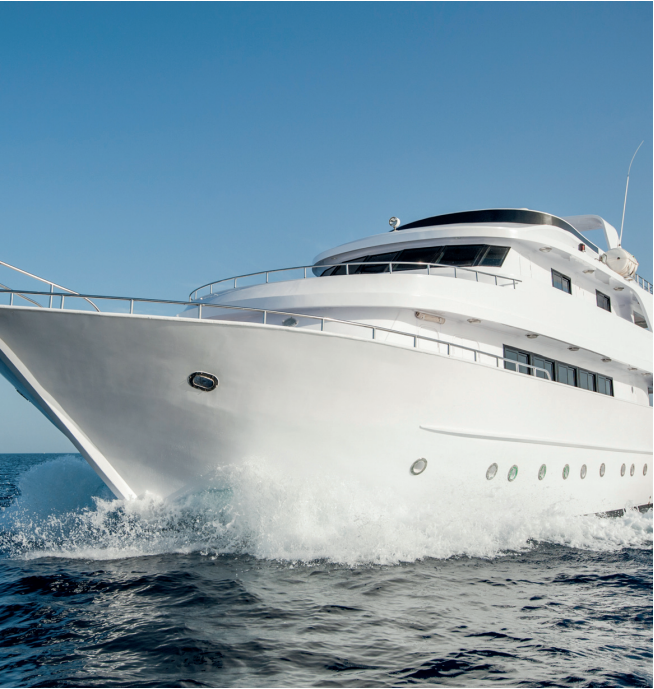
There comes a time in the life of every boater when they decide it is time for a change. You have had your boat – and it’s been great while it lasted. However, now you may want a faster, younger or bigger (or possibly smaller) model. Or perhaps simply move from sail to power, or power to sail.
Why move?
Your motives may be many. Possibly you are no longer as active as you once were and now is the time to move from sail to power. Maybe you bought your first boat with limited knowledge and now have a better view of what exactly suits you. It could be that your first boat was simply a trial – to see if you liked boating – and you have now decided that you do and want something better (= more expensive!).
Possibly the ‘joys of berthing’ have convinced you that you now need a boat with greater and easier manoeuvrability in crowded marinas using features such as a bow thruster, twin engines, joystick control and automatic fenders. Perhaps you want to cash in part of your pension, have just sold your business, have won the lottery or received a great inheritance. Whatever your source of finance, you want to enjoy the benefits of it.
Making the move – sell and buy, or buy and sell?
The first question is – do you have to sell your current boat first – or can you buy your next boat without having sold your first one? This is primarily a question of finance. If you have the funds, there is no need to wait until your current boat is sold.
However, don’t forget that you then have expenses on two boats, not one, until your current boat is sold. Of course, you could try and do a part-exchange. This might work for you – however part-exchanging is far more problematic than part-exchanging a car.
If it’s a private sale and purchase, you are very unlikely to find someone who has a boat that you want and who also wants the boat you currently have.
If it’s via a broker, then usually the broker would have to take your boat into stock. Most brokers are reluctant to do this, as their business model is a broking one, unlike most motor traders. They rarely take into stock and sell on their own behalf. For those brokers that are willing to take boats into stock, they are often only willing to do so if the boat you are buying is of much higher value than the one you are selling. Also, you won’t be surprised to hear, they often don’t give great prices for boats they buy. Therefore, you usually get best value by separating out the selling part and the buying part of getting your next boat.
Making the move – what do you want, really really want? (with apologies to The Spice Girls!)
Next, consider exactly why you are making the move. If it is for space on board – then this is the most common reason why people move. However, there is an unfortunate rule of thumb about this – the price of a boat is (very roughly) proportional to the cube of its length, everything else being equal.
So – to move from, say a 25 footer to a 50 footer, this doesn’t just double the cost – it multiplies it by a factor of (maybe) about 8 times. This ‘cubing rule’ is logical if you think about it – you are increasing not just the length, but also the beam and the height.
Bottom line – if you want to move to something significantly bigger, you have to be prepared to spend the money. However, at Go Earth our speciality is boat procurement, so we can help you save at least a proportion of that extra cash. That’s what we do.