
Buying a Trailer
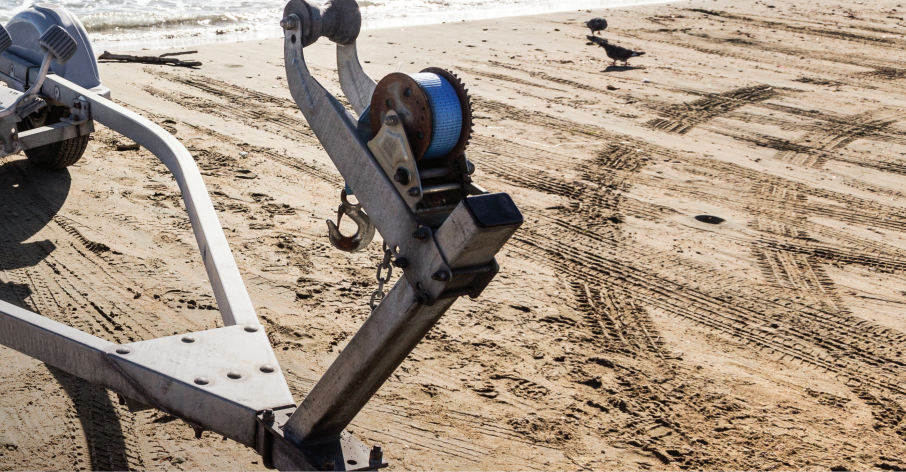
You have your nice boat – but are faced with the problem of where to put it. If you have a large boat, then you have no choice but to use a marina or mooring. However, for boats up to, say, 25 or 26 feet, then storing your boat on a trailer is a very viable option. Most small boats, RIBs and dinghies can easily and safely be stored and transported on a properly constructed trailer. So – what are the advantages and disadvantages of a trailer? The good news Let’s look at cost first. A good, new, trailer for a 16 footer boat costs about £2,500. The marina berthing fees are typically about this – except you have to pay them every year. The savings on marina fees is like getting 100% interest on your investment! That’s a great financial incentive. If you want to do any work on your boat, storing it at home on the trailer is much more convenient than having to traipse down to the marina. I know from bitter experience that having gone down to the marina, you often don’t have the right tool with you to finish the job A trailer means that you don’t have to keep the boat in the water, and can give it a freshwater wash-down after every trip. This keeps the hull in great condition. It also means that you don’t have to antifoul the hull – giving you another annual financial saving. Having the boat at home means that you can go to whichever part of the country you wish – you are not tied to your usual marina. All you need is a suitable launching ramp or slipway. There are many across the country, and the public ones are free of charge. Websites such as Boatlaunch list suitable sites in the UK and near Europe. Clicking on the map in the locality you want brings up detailed information on each slipway and its suitability for different types of boat. Disadvantages Of course, you need four essentials – a boat small enough to be trailed, the trailer itself, a car capable of towing the trailer and boat and finally somewhere (on your driveway or elsewhere) to store them. If you don’t have these then unfortunately a trailer option is not viable. Size matters Choosing the right size of trailer for your boat is important. Trailers are typically suitable for everything from a small sailing dinghy right up to a 25 or 26 footer. They are not usually viable for sailing yachts with a deep keel. You can of course get a trailer for small deep keel boats, but you then usually have to launch them via a crane, rather than a ramp – and the cost of cranage negates any cost savings. The size and weight of the boat determines the size of trailer you need. You need to take account of the LOA (length overall), plus any outboards. Weight matters The relevant weight is the weight of the boat dry, plus the weight of fuel, freshwater and blackwater on board, plus all the ‘essential’ bits and bobs that seem to get crammed into boats. Heavier boats may require a twin-axle trailer. The trailer does not have to have brakes if the weight of the gross trailer weight is less than 750kg or half the towing vehicle’s kerb weight – whichever is less. The full set of rules are complex. Go Earth can assist in any sizing questions you may have. Just contact us, and we will try to help. Adjustability A key element when finding a suitable trailer is adjustability. It has to fit your boat – and continue to fit your boat as you load and unload it. There are several elements to this. Firstly as you load the boat, the rollers should automatically adjust to the changing profile of your boat’s hull. Indespension trailers do this by their swing axle method so that the change in the bow-stern dimensions are covered. (see photo) Then the change in the portstarboard dimension (i.e. the keel angle) is covered by the pivoting of the rollers arms (see photo). Indespension trailers pioneered this swing axle design (see the video below for a demonstration) which is a key feature of their boat trailers. In addition, for larger adjustability, all the main components should be attached to the framework by U-bolts. Then you can very easily adjust all the dimensions by unscrewing the nuts, moving the U-bolts, and then re-tightening. Indespension, again, have majored on the concept of completely bolted trailers. (The bolts are actually rectangular to fit the shape of the components, rather than ‘U’ shaped, but everyone calls them U-bolts!) This provides both adjustability and ease of replacing any damaged components. Some boat manufacturers will try to sell you a trailer when you are buying a new boat. That’s fine as far as it goes – but there is a catch. The trailer is often built just for that model of boat, and often has no or limited adjustability. What happens if, when you eventually sell the boat, the new purchaser does not want a trailer if, for example, they have a berth somewhere? You would be left with an almost useless trailer. Our general recommendation is to purchase a trailer with a wide range of adjustability such as the Indespension range. https://www.youtube.com/watch?v=GRlp5UeQaFs Size and weight matters – again You have your boat. You have the right trailer. Now you need a suitable car or other towing vehicle. Most cars can take a tow bar at the rear. Notable exceptions include Porsche 911s, and a few other specialist cars. The towing weight of a car is defined by the manufacturer. It is sometimes called the ‘gross train weight’, and may be in the owner’s handbook or on the VIN plate on the car. You need to check the combined weight of the boat, trailer, and all the various bits of boating paraphernalia that you will throw into
The Cost of Running a Boat
One question we often get asked is “How much will it cost me to run my boat?” While some people worry that owning a boat is like throwing money into a hole in the ocean, a sensible approach to understanding and managing costs will keep them at a reasonable level. Just like owning a car, having a boat comes with running costs, and the key is to understand and manage them so they stay comfortably within your budget. This article provides a useful framework for doing just that. Rule of thumb It’s nice to get a simple answer to the cost question – If you want a simple answer, we would say budget between 6% and 10% of the purchase cost for annual running costs, excluding depreciation. This is an over-simplified answer but maybe it’s a good starting point. In a nutshell, if you can afford the purchase price, you can probably afford the running costs If you want a method of getting a fuller, more accurate answer, then read on… Categories of running costs Of course, you are interested in the level of costs. However, we recommend that you also categorise your costs by two criteria, which we call predictability and controllability. These are related but different; and this article looks at these two factors. Predictable costs are costs that you know with a reasonable degree of certainty in advance. For example, berthing costs are typically so much per metre, per year. You know the size of your boat and you can do the math, and so these costs are highly predictable. They are even predictable for several years in advance, as berthing costs are likely to rise only by about the rate of inflation. Many other costs fall into this “predictable” category, such as insurance costs etc. Some other costs may have only a medium degree of predictability. Fuel costs per litre are one example. They may certainly rise or fall, but are unlikely to halve overnight. Controllable costs are unsurprisingly, costs that you can control yourself. Total annual fuel costs are a good example of this. You can get them down to zero by not going out in your boat; although this is not an approach we would recommend. The nautical miles you travel and the speed you go at (and hence fuel consumption) are all fully controllable by you. Their predictability depends on how certain you are about how far you will travel in the coming year. Therefore, in the table below, they are shown in each of High, Medium and Low Predictability. On the other hand, your annual berthing costs have, at best, medium controllability. Given the size of your boat, the marina will charge you their rate, and there is not much you can do about it if you want to stay at that marina. Telling fibs to the marina about the size of your boat doesn’t work. They know the size of most boats – sorry folks! However, you do have some control, as you could move to a cheaper marina, change to a mooring instead of a berth or even move to a trailer. Some marinas even offer a park and ride system, whereby boats up to a certain size are dry-stacked out of the water – this is typically at a much lower cost than a traditional berth. If you think about your costs in this way – predictability and controllability – you will have greater understanding of how costs could behave, and therefore be able to much more easily manage your budget. The numbers Of course, you now need to know the specific numbers to attach to the various costs. These are so variable as it depends very much on the type of boat. For example, a superyacht probably has crew recruitment, selection, retention, salary, and various on-costs to take into account. For the typical boater, this is not an issue – other than the need to supply the occasional G+T to willing volunteers who assist with berthing and other crewing activities. At Go Earth Boating we can help you draw up a realistic budget for running cost for any proposed boat. Specific costs Be aware that certain types of boating have specific costs associated with them. In particular boating on a canal or river typically requires an annual license and a Boat Safety Certificate every four years. Also, steel hulled boats require blacking; and fibreglass boats require anti-fouling if kept in the water. Sailing yachts have rigging costs that do not apply to powerboats. These rigging costs depend in part on how energetically the yacht has been used and the stresses on the mast. Defraying costs There is another way in which you can reduce costs even more. At the high end, for a superyacht, you can charter your boat out. There are many agents that will manage this process for you. Go Earth Boating can recommend suitable managing agents and give you an estimate of the possible income. Indeed, if you charter the yacht out a lot, you can even cover all your running costs; and still give yourself plenty of time on the boat. However, all is not lost if your boat does not qualify for the title of ‘superyacht’. You can rent your boat out via agencies such as Beds on Board and AirBnB. The deal here is that people stay on the boat as an alternative experience to a hotel; but do not take the boat out. The boat stays in the berth. Our company boat, a Jeanneau Prestige 34, is on both these sites and is a very popular choice. Go Earth Boating can advise you on the pros and cons of this option if you are thinking of buying and then defraying the running costs in this way. Conclusion Boats do have running costs – but they are in essence no different from the costs of running a car and with a bit of common sense are easily manageable. For any additional questions, contact Go
5 Myths About Buying a Boat
Myth 1: Boats Are Only for the Super Wealthy Boats aren’t just for billionaires. While superyachts can cost millions, there are boats available for a few thousand pounds, especially in the second-hand market. From modest dayboats to luxury catamarans, there’s something for every budget. Thanks to flexible marine finance options and a wide variety of models, boating is much more accessible than many people think. The key is to buy wisely, just like with any other major asset. Myth 2: You Must Pay the Full Price Upfront You don’t need to pay 100% in cash to own a boat. Marine finance providers offer loans with flexible deposits and repayment plans, often up to 10 years, with competitive interest rates.Most lenders will expect a decent deposit (typically around 30%) and a stable income. If you have seasonal income, you can choose a lender who understands and accommodates this. Myth 3: Bigger Boats Are Always Better It’s tempting to buy the biggest boat you can afford, but bigger doesn’t always mean better. The right boat depends on how you plan to use it.✅ Smaller boats are easier to handle, cheaper to maintain, and often surprisingly spacious.✅ Larger boats offer more luxury and room, but come with higher costs, more upkeep, and may require crew.The key trade-offs when buying a boat are size, age, and price. Myth 4: It’s Only Worth Owning a Boat in Hot Climates Boating isn’t just for the Mediterranean or the Caribbean. Many of the most active boating communities are actually in cooler countries like the UK and Scandinavia.British lakes, rivers, canals, and coastal waters offer fantastic boating experiences, often with fewer crowds. Modern boats are also built with better insulation, heating, and weather protection, making them comfortable year-round. Myth 5: Buying a Boat Is Easy Some people walk into a marina, fall in love with a boat, buy it—and then regret it. Why? Because buying a boat isn’t simple. It’s a big decision.Think of a boat as part house (bedrooms, kitchen, toilet), part car (engine, electrics, navigation), and part floating home exposed to the elements. There’s a lot to consider legally, technically, and financially.
Blue Space, Boating and Mental Health

What Is Blue Space? Blue spaces are officially described as ‘outdoor environments–either natural or manmade–that prominently feature water and are accessible to people’. In short – the collective term for rivers, lakes or the sea As well as being a source of calm for both body and mind, Blue Space has proven health benefits – for example, regularly getting out of the city into a “blue space” can result in improved focus, a greater sense of calm, improved sleep and decreased stress. It can also play a major factor in another sector…mental health. There is a compelling body of evidence that suggests that being in contact with water, can promote human health and wellbeing – and this isn’t just some new age pseudoscience – it’s a growing area of scientific research being taken seriously by scientist and research experts. Blue Health In 2016 a research initiative called BlueHealth was launched, to understand how blue space affect health. Between 2016 and 2020, BlueHealth (Home – BlueHealth (bluehealth2020.eu) conducted over 20 studies in more than 18 different countries across the world, exploring what impact urban waterways have on health. NHS The COVID-19 pandemic has highlighted the importance of being outdoors to people’s mental and physical health, as well as the lack of access to green space. Social prescribing is a way of helping people to manage their health and wellbeing, by enabling them to identify and meet their own needs, through the wider community not just the NHS. The NHS Long Term Plan commits to significantly expanding the number of social prescribing link workers in primary care. Link workers can support individuals who may have complex health care needs who might otherwise be admitted to hospital. Boating People who are frequently with blue spaces, whether through paddle boarding, surfing, sailing or fishing have mentioned the therapeutic quality which it possesses, as described by Hilaire Belloc in his book ‘Moods to fill the storehouse of the mind’. If you’re reading this article, then the possibility of undergoing boat-based treatment sounds pretty appealing to you. Boating Therapy is a form of experiential treatment that allows you to take part in sessions that are based on first-hand practice. The sessions are designed to allow you to learn and heal through the practice of recovery. The opportunity to be present——-within the simplicity of being at one with your environment, without agenda or destination, is a wonderful gift emerging from this space. This can also have a positive effect on us in the blue space and we may somehow feel more at home there; even in a strange way. The Sail into Life programs run by Sea Sanctuary have been taking advantage of the sea’s mental health benefits since they began. The programs allow clients to be at one with the sea, enjoying the space and the sensory awareness. It is these moments the research team believes that can help those suffering from conditions such as depression and anxiety to enjoy a step-change in their treatment. The air is filled with the salty sea air as you capture your surroundings on camera. Suddenly, you begin to feel warm inside and realize that it’s because your boat is moving forward toward a new chapter in your life. During this time, each patient has a unique experience where s/he will figure out the direction she wants to go in life and how she would like to live that life. The patients encompass the motion of the boat on the water, experience the sea salt scented breeze and are given a chance of self-reflections without worldly distractions. Greenery It’s no secret that nature is good for you. People who live in areas with greenery around have more positivity and calm than people living in the concrete jungle. Nature therapy is beneficial to people suffering from ADHD and dementia. Living and spending time in a green environment helps increase creativity, productivity, and reduce aggression. When we listen to the tweets of the birds and the sound of a waterfall, we feel calm and at ease more than when we hear the noise of traffic. Listening to the sounds of nature helps us relax and even improves our health in measurable ways. Nature can make you feel more alive, connected, and peaceful. Environment Secretary George Eustice announced a £4 million investment in July 2020 for a cross-government project aimed at preventing and tackling mental ill health through green social prescribing. This fund has since been increased with additional contributions from NHS England and NHS Improvement, Sport England and the National Academy for Social Prescribing (NASP), taking the total to £5.77 million. Finally, the project’s goal is to embed green social prescribing into communities and test how it can improve mental health outcomes, reduce health inequalities, and reduce demand on the health and social care system. The project will also work towards developing best practice in making green social activities more resilient and accessible. We can take from this article many useful points, for example how blue space is peace to the mind and eyes, how greenery freshens you up anew and finally how beneficial boating can be towards moving to an more healthy mind.