
Buying a Trailer
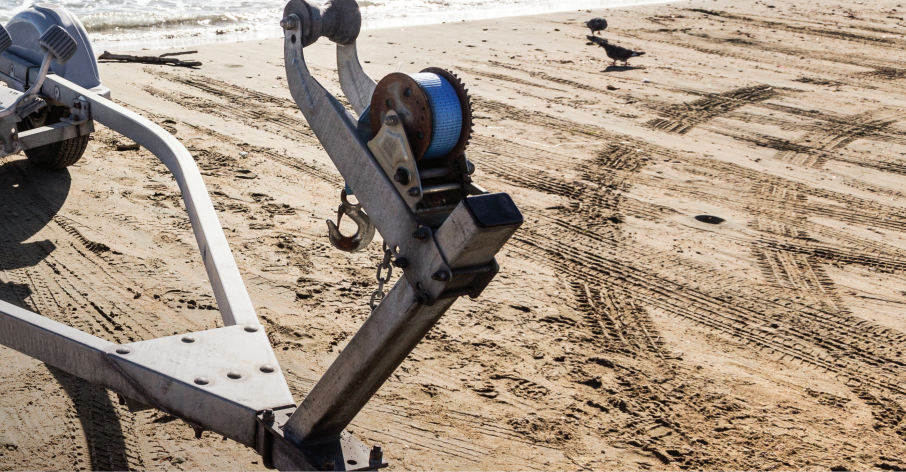
You have your nice boat – but are faced with the problem of where to put it. If you have a large boat, then you have no choice but to use a marina or mooring. However, for boats up to, say, 25 or 26 feet, then storing your boat on a trailer is a very viable option. Most small boats, RIBs and dinghies can easily and safely be stored and transported on a properly constructed trailer. So – what are the advantages and disadvantages of a trailer? The good news Let’s look at cost first. A good, new, trailer for a 16 footer boat costs about £2,500. The marina berthing fees are typically about this – except you have to pay them every year. The savings on marina fees is like getting 100% interest on your investment! That’s a great financial incentive. If you want to do any work on your boat, storing it at home on the trailer is much more convenient than having to traipse down to the marina. I know from bitter experience that having gone down to the marina, you often don’t have the right tool with you to finish the job A trailer means that you don’t have to keep the boat in the water, and can give it a freshwater wash-down after every trip. This keeps the hull in great condition. It also means that you don’t have to antifoul the hull – giving you another annual financial saving. Having the boat at home means that you can go to whichever part of the country you wish – you are not tied to your usual marina. All you need is a suitable launching ramp or slipway. There are many across the country, and the public ones are free of charge. Websites such as Boatlaunch list suitable sites in the UK and near Europe. Clicking on the map in the locality you want brings up detailed information on each slipway and its suitability for different types of boat. Disadvantages Of course, you need four essentials – a boat small enough to be trailed, the trailer itself, a car capable of towing the trailer and boat and finally somewhere (on your driveway or elsewhere) to store them. If you don’t have these then unfortunately a trailer option is not viable. Size matters Choosing the right size of trailer for your boat is important. Trailers are typically suitable for everything from a small sailing dinghy right up to a 25 or 26 footer. They are not usually viable for sailing yachts with a deep keel. You can of course get a trailer for small deep keel boats, but you then usually have to launch them via a crane, rather than a ramp – and the cost of cranage negates any cost savings. The size and weight of the boat determines the size of trailer you need. You need to take account of the LOA (length overall), plus any outboards. Weight matters The relevant weight is the weight of the boat dry, plus the weight of fuel, freshwater and blackwater on board, plus all the ‘essential’ bits and bobs that seem to get crammed into boats. Heavier boats may require a twin-axle trailer. The trailer does not have to have brakes if the weight of the gross trailer weight is less than 750kg or half the towing vehicle’s kerb weight – whichever is less. The full set of rules are complex. Go Earth can assist in any sizing questions you may have. Just contact us, and we will try to help. Adjustability A key element when finding a suitable trailer is adjustability. It has to fit your boat – and continue to fit your boat as you load and unload it. There are several elements to this. Firstly as you load the boat, the rollers should automatically adjust to the changing profile of your boat’s hull. Indespension trailers do this by their swing axle method so that the change in the bow-stern dimensions are covered. (see photo) Then the change in the portstarboard dimension (i.e. the keel angle) is covered by the pivoting of the rollers arms (see photo). Indespension trailers pioneered this swing axle design (see the video below for a demonstration) which is a key feature of their boat trailers. In addition, for larger adjustability, all the main components should be attached to the framework by U-bolts. Then you can very easily adjust all the dimensions by unscrewing the nuts, moving the U-bolts, and then re-tightening. Indespension, again, have majored on the concept of completely bolted trailers. (The bolts are actually rectangular to fit the shape of the components, rather than ‘U’ shaped, but everyone calls them U-bolts!) This provides both adjustability and ease of replacing any damaged components. Some boat manufacturers will try to sell you a trailer when you are buying a new boat. That’s fine as far as it goes – but there is a catch. The trailer is often built just for that model of boat, and often has no or limited adjustability. What happens if, when you eventually sell the boat, the new purchaser does not want a trailer if, for example, they have a berth somewhere? You would be left with an almost useless trailer. Our general recommendation is to purchase a trailer with a wide range of adjustability such as the Indespension range. https://www.youtube.com/watch?v=GRlp5UeQaFs Size and weight matters – again You have your boat. You have the right trailer. Now you need a suitable car or other towing vehicle. Most cars can take a tow bar at the rear. Notable exceptions include Porsche 911s, and a few other specialist cars. The towing weight of a car is defined by the manufacturer. It is sometimes called the ‘gross train weight’, and may be in the owner’s handbook or on the VIN plate on the car. You need to check the combined weight of the boat, trailer, and all the various bits of boating paraphernalia that you will throw into
The Joy of Berthing
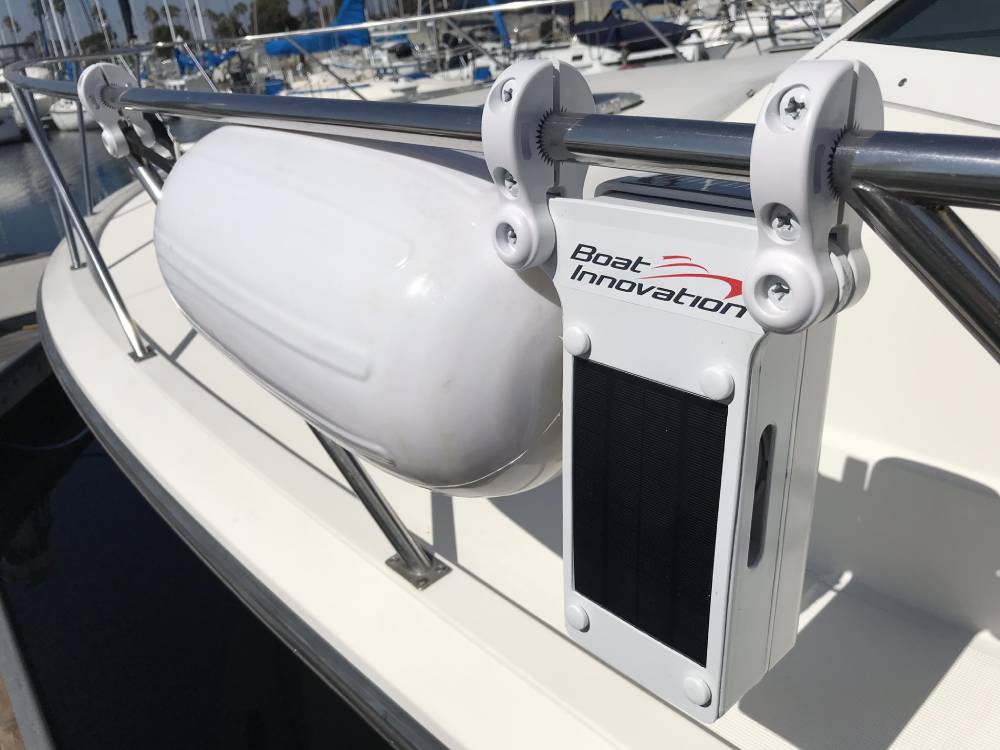
Innovative devices that can aid berthing We all know it. Berthing a boat can sometimes be remarkably straightforward, and at other times can be a time of stress, challenge, shouting, misunderstandings, slight (and possibly expensive) bumps and even the odd (and definitely very expensive) trip to the divorce lawyer! What can you do to reduce the stress? Obviously practice and training are important. So is mentally rehearsing what you are going to do, taking into account wind, current, the windage, momentum and general characteristics of your boat… and of your crew. Fortunately, nowadays, just like parking a car, there are some systems that can help you. For wind direction, simply look at the top of the mast of any sailing yacht. The simple arrow (the masthead fl y) will tell you the direction the wind is coming from. Look at a berthed boat so you get the true wind direction. The wind direction can veer, back or can be steady. Again, look at the arrow. To check the direction and strength of the current, and whether you are on a falling or rising tide, know the area and look at the water. Reading the water is a learned (and easy-to-learn) skill. Tidal maps are generally of limited relevance once you are in the marina itself. The windage of your boat and the nature of your keel will determine the extent to which the wind and current will affect you. If you are new to the boat, spend a few minutes outside the marina, just drifting. See how and which way the boat moves. Various systems make close quarter manoeuvring much easier. Systems like twin engines, bow thrusters and stern thruster have been around for some time. Slightly more recent innovations such as pod systems (like Volvo Penta’s IPS range, the MerCruiser Cummins Zeus, and the ZF Marine 4000 systems) coupled with joystick control aid the control of your boat. The problem with all these systems is that they are either impossible or very expensive to retro-fit. However, there is one activity that until now has always led to the crew being very busy and all too often trying to be in all parts of the boat at the same time – and that is managing the fenders. This applies especially if you are short-handed – such as being single-handed or just a skipper and his/her partner. The scenario is all too familiar. The skipper shouting orders and the partner/crew running from one end of the boat to another deploying fenders, trying to fend off, as well as keeping a lookout. All this is happening at a busy time. Even when you are out on the water you need to find a way to safely stow the bulky fenders so that they don’t cause any damage by bouncing around. Fortunately, a new solution has been designed and launched – the Automatic Fender system. The concept is marvellous in its simplicity. The foam fenders are stored in a special basket. When you approach the marina, the inbuilt GPS knows where you are. The basket then swings out and the motor automatically lowers the fenders to the correct height. Once you have set the height for the marinas you visit, the system remembers them. If you prefer, or are entering a new marina, you can set the height via, for example, a tablet (using the in-built Bluetooth). What does the crew have to do? Sit back and slowly sip the gin and tonic. Or beer. That’s it. It really is as simple as that. How complex are they to initially fit? Again, simple – about 20 minutes per basket. There is not even any wiring to fit. The motors are fully driven by solar cells at the top of the unit. The foam fenders are better at retaining their shape, as they cannot deflate or get punctured. For the larger, crewed, yachts and super-yachts, the installation of this system may even save money on crew costs, as fewer deck-hands may be required. They can even be integrated into the yachts systems; as well as adding to the all-important bragging rights! Go Earth is the international (apart from the USA) distributor for these products. We believe this product will become as essential as, say, a bow thruster in aiding the berthing process. It helps make berthing painless!
Fire Safety on Boats
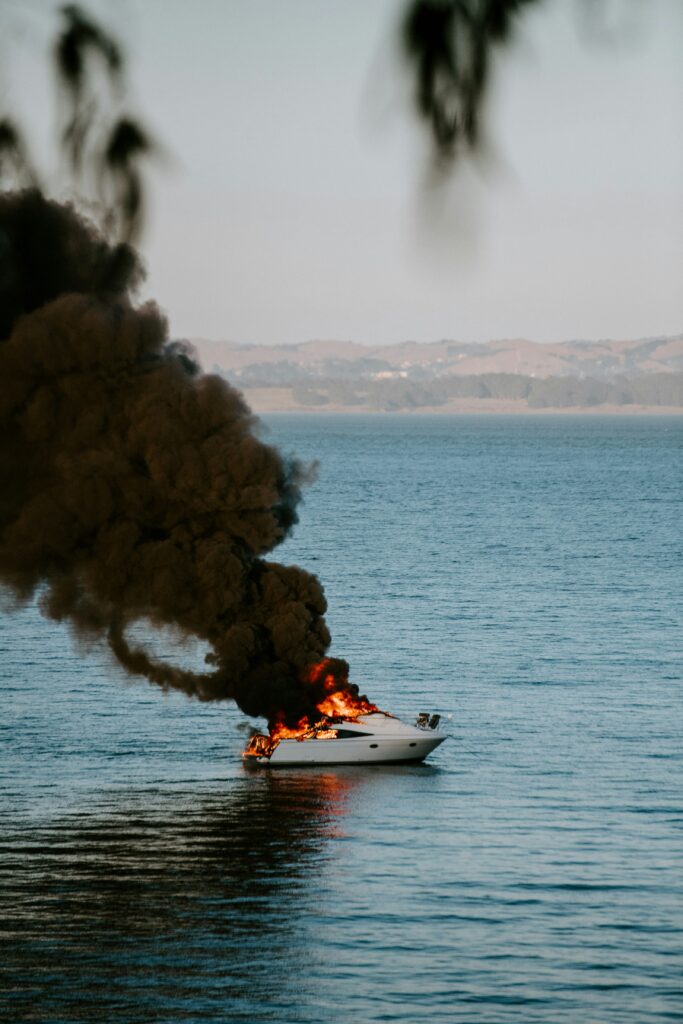
You’ve probably seen pictures or even videos of a boat on fire. It certainly is not a pretty sight and one that quite correctly puts fear – or at least caution – into your heart. There is no doubt that the best approach requires a combination of prevention, detection and first line firefighting. Let’s be clear – if a fibreglass boat is seriously on-fire, then ‘abandon ship’ might be your only option. Never put yourself or others at risk. Prevention requires a common-sense but methodical approach. Carry out a Fire Risk Assessment – identify what could go wrong; and what you can do to prevent a fire from ever starting. For example, an absolute no smoking policy is the best approach. Also, be very careful of those gas lighters that are used to light a gas ring – they can still have a flame or be hot when placed on a surface or in a drawer, possibly starting a fire. Detection is quite straightforward. There are many low-cost smoke and fire alarms on the market. (Carbon monoxide alarms are also very important.) They are all easy to fit. We have used industrial strength ‘Velcro’ to affix alarms without drilling walls or ceilings. They seem to hold even in choppy seas. Placement is of course important. You need to have one in every ‘room’ in the boat. Don’t assume that fires only start in the galley. First-line firefighting is more complex. Some basic rules apply. Obviously, a pan-pan or mayday (or dial 999/112 if VHF is not available) is required. To safely extinguish a fire you need to get to it very quickly. It follows, therefore, that you need an extinguisher (even if just a small one) in easy reach in every room that is likely to be occupied (cabins, galley, saloon etc.). Always leave yourself an escape route. One risk occurs if you sleep in a forward berth. If a fire starts in the galley, then this may block a possible means of escape. However, opening the forward escape hatch above the berth also has a risk – of encouraging the fire by allowing a draft of air to fan the flames. This reinforces the need to have an extinguisher close to hand. The galley should of course also have a fire blanket. Be sure you know how to use it correctly to avoid burns to your hands. There is, however, one serious, well recognised problem with the common powder type of fire extinguisher. If they have to be used, they make a truly horrendous mess. Unfortunately, they get into all the soft furnishings, they corrode electric and electronic connections, they are potentially toxic if breathed in, they act as a laxative, they can be destructive of engines. The mess can only be safely cleared up using personal protective gear. Go Earth Boating researched this problem and found two ranges of extinguishers (Firetool for inside spaces and Blazecut for the engine bay) that do not suffer from these issues.
Embracing Fender Technologies to Enhance Boating Experience
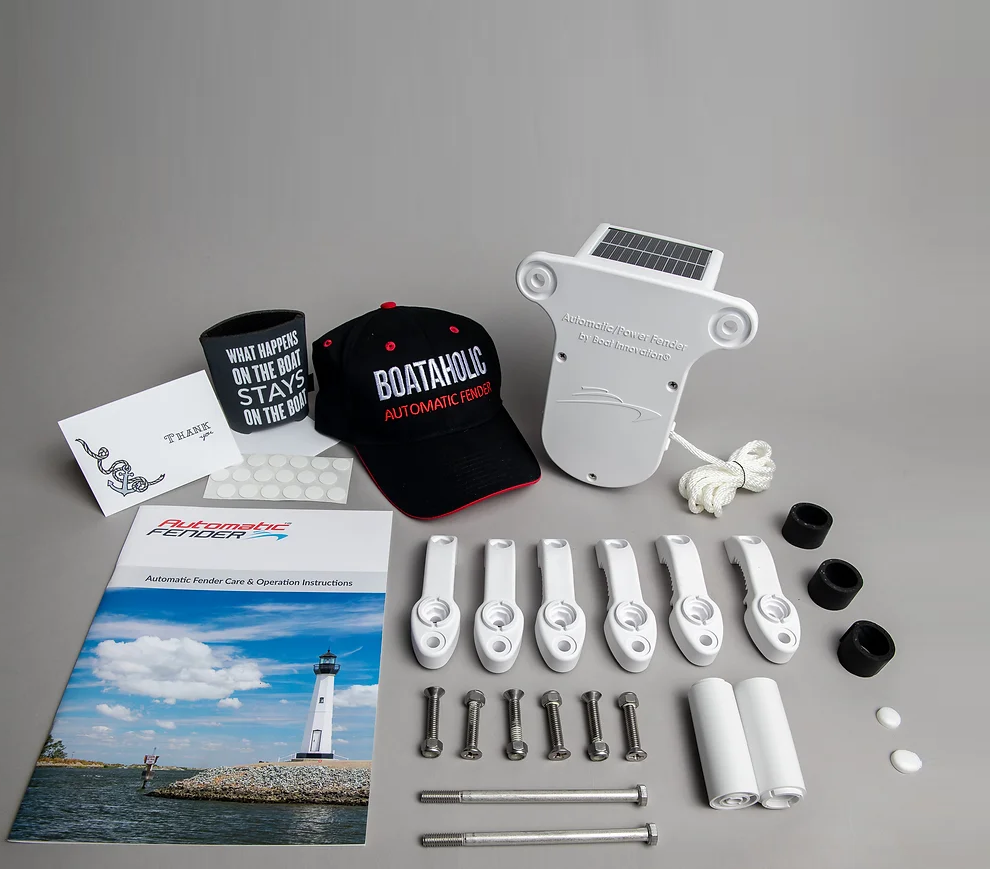
Boating has always been a blend of tradition, skill, and adventure. However, as technology continues to advance, it is worth it for boaters to embrace the latest innovations to enhance their yachting experience. We will explore the rise of fender technologies, and examine the role of a Fender System in facilitating safer, more effortless procedures for docking and undocking boats, thereby minimising the risk of unwanted impact damage to the boat. Some experienced boaters may say “I have been on boats long enough. We do things the way we always have, using our hands, our eyes and our instinct – that is what real boating is to me. Not some fancy technologies.” Long-time boaters often are not too quick to adopt new technology because they have years of practice and trust in the old-school ways of doing things. They reckon that sticking to what they know keeps the real spirit of boating alive, even though the technology could make their boating experience safer and easier. New Technology Broadens the Horizon in Boating Similar to the emergence of digital photography in the 1990s, there was initial resistance from professional photographers as they were deeply rooted in their established analogue techniques, and perceived this technological shift as a potential threat to the art. However, as time passed, they began to realise that digital cameras not only preserved the fundamental principles of photography but also expanded its scope, adding diversity and excitement to the craft while reducing cost. This flexibility ignited a resurgence of interest in the art, enabling professionals and amateurs to experiment with new styles without losing sight of basic photography theories and skills. Similarly, the Fender System enhances the pleasure of boating by facilitating safe docking and undocking procedures, while boaters continue to refine and utilise their boat manoeuvring skills. This increased safety measure reduces potential damage to the boat and relieves boaters’ stress during the process, hence enhancing the overall experience on the water. How Does It Help? We probably agree that docking a boat is quite challenging, as boat fenders are set to mitigate the unavoidable knocks and scrapes that might cause during docking and undocking. Naturally, it is always an unexpected gust of wind, a sudden turbulence on the sea surface, or an oversight that makes boat arrival and departure at a berth risky and even dangerous. Despite its usefulness, boat fenders come with complications for boaters, as they are bulky to store and inconvenient to use, not to mention the challenges of having a crew to position them correctly at the bow, especially in turbulent waters. The situation can be even more problematic for those who have limited mobility, or those who love sailing solo – the necessity to abandon the helm to deploy or lift fenders during the docking and undocking process is not only risky, but it could be an unwise course of action. The Fender System addresses all these challenges. Using smart sensing technology and remote monitoring & control, the system allows boaters to control boat fenders remotely from the cockpit when docking or undocking the boat, significantly reducing stress and effort, especially in dangerous situations. The system is notably easy to use. It has been designed for boaters to manage it from anywhere on the boat using a smartphone or tablet and a simple app. Powered by batteries that last a long time, the system comes with a waterproof casing so boaters do not have to worry about regular replacements. The installation of the Fender System is considerably simple by just screwing it on the boat rails using a suitable screwdriver. The Fender System is not just about making docking and undocking safer and more efficient, but also about keeping things neat. It also serves as a practical tool for novice boaters, allowing them to hone their sailing skills, while simultaneously enjoying sailing. The integration of traditional skills and the Fender System is paramount to enhancing the yachting experience. By embracing innovations, boaters can preserve their connection to the rich heritage of seamanship while enjoying the safety and convenience. Learn more about the latest version of our Fender System. Feel free to contact us for placing your order.