
You Old Seadog
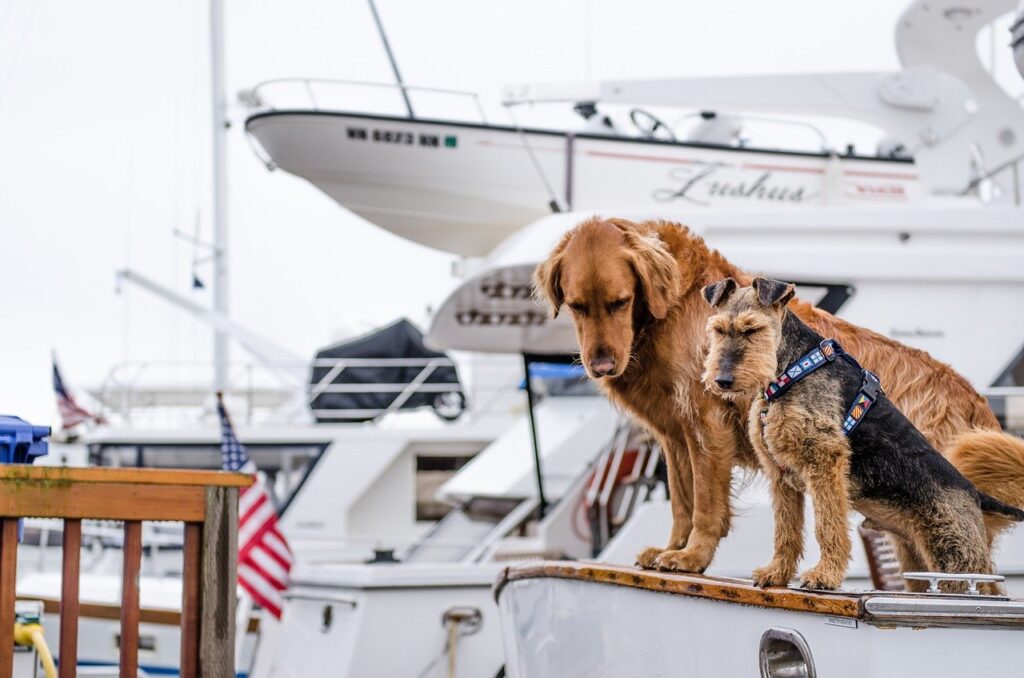
Dogs and Boating Wikipedia reliably informs us that ‘seadog’ can refer either to a sailor or a dog. Well, it occured to me that many of us have actual dogs, of all breeds, shapes and sizes that come out on our boats, so a few words about them might be helpful. Some dogs do genuinely love being out on a boat and take to it like a fish to water (if thats not mixing metaphors). Others are less sure or even nervous about the whole adventure. This article is intended to help dog owners acclimatise their dogs to the boating life. Let’s start at the beginning … Walkies Most dogs are happy to go to a marina, even they can sense the excitement. However, some dogs don’t like walking along the pontoons or on a linking bridge. This is not a good start, before you have even got onto the boat.. I have seen owners trying to pull their small, but apparently powerful dog by his lead along a pontoon. Even the offering of a tempting morsel of chicken would not get the dog to move. Often the issue can be quite simple, the dog is uncomfortable with the gaps between the wood on the pontoon, or the patterns of holes in plastic pontoons. Their claws can get painfully caught, especially in plastic ones. The solution is take it slow and steady. The first time you take your dog to a marina, have it walk just a few staps, and then get back on dry land. Reward its behaviour. Then try a little bit of a longer walk along the pontoon. Again use positive reinforcement so that the dog enjoys the whole experience. Smelly Toys and Beds Ok, let’s assume that you have now got the dog happily on your boat. He will be more comfortable if he has some of his toys and his usual bed on the boat. Don’t make the mistake of buying him a new bed for his boat – use his existing one, with it’s existing small. Yes, even if the smell is a bit strong – hopefully the sea air will take some of the pong away. Your Dogs First Boat Ride Get the dog used to the boat before you venture out on the water with him. Once he is happy with the boat, then he is far more likely to be happy going out on the water. Be gentle with your dog on his first trip out. The noise, the strange rocking of a boat can all be very worrying for some dogs. We suggest that your first ride out with your dog should be on a very calm day. Act naturally, and give your dog a treat ot two. What sometimes works with dogs is to take them out in a small dinghy (RIB) so that they can put their paws on the tubes and look around the marina. We know our own dog loves this. Note that dogs can actually get seasick, so watch out for signs of this. If the noise of the boats engine seems to be worrying your dog, then just slow down to a speed and noise that he is comfortable with. Over tie, you can get him used to faster speeds and noisiers engines. Also, ensure that your dog is hydrated and has enough water to drink for the journey. Safety First The RNLI quite correctly say of lifejackets “useless unless worn”. The same applies to dogs. Dogs should have a life-jacket of the correct size, and must wear it (despitetheir objections). Some dogs have a habit of jumping into water at the fi rst chance they get. Labradors are real experts at this (and also at drenching bystanders when they get out of thewater and shake their fur). Note that dog life jackets are really just floatation devices – they don’t automaticallyinflate if (or when!) your dog jumps in the water. What they should have is a grab handle on the back so that you can safely (and unceremoniously) lift your dog out of the water. If you really want to embarrass your dog, lift him out with a boathook under the grab handle!! Which Breed? Different breeds react differently to the water. Naturally nervous dogs may not like their time on the boat, being concerned about strange noises and motion. Other breeds will love it. If you are thinking of getting a dog to go with your boating, then there is a useful article on the suitability of a few breeds. Please remember though, that a dog is for life and has to fit in with all aspects of your life. Success Treat your dog right, and train him well, and he will come to regard your boat as part of his home – even to the extent of guarding it and barking at strangers. He will be happy on your boat and look forward to his boating adventures with you. However, you need to train him not to bark loudly in the middle of the night when he is guarding your boat against real or imaginary noises! Responsible Dog Ownership Of course, owning a dog brings responsibilities as well. The following tips may help: Take ‘your’ dogs for plenty of walkies – but ALWAYS on a lead in the marina. Consistently, encourage your dog to wait until you are in a dog-walking area before relieving himself. If ever there is an accident, please clear it up immediately. I suggest always having a few ‘poop bags’ with you. If there are some doggie waste bins in the marina, please do use them. If there is any residue left, please wash it away thoroughly with the nearest water tap. If your children take the dog for walkies, please emphasise to them the importance of following these tips. I hope that the above is helpful, and gives assurance to non-dog owners that the majority of dog owners areesponsible.
An Interview with Boat Trader

The leisure marine industry has many different companies in many sectors selling a wide variety of goods and services to boaters and potential boaters. In this special interview, we talk to Boat Trader and explain why ‘Go Earth does it differently’. Something different Boat Trader: Martin, can you tell us a bit about why you started Go Earth Martin: There are two main elements to this; a link with the water and wanting to do something different – some ‘thinking outside the box’ – if you will forgive the cliché! Firstly, we have had a link to the water in one form or another for many years. We been boaters ourselves for over two decades, and I have been a scuba diver for four decades. Our daughter and son-in-law are both qualified PADI scuba diver instructors. I am also a dinghy sailor – or at least attempting to be! So, we got to know the vast variety of companies in the broad leisure marine industry. Next we decided to form a company – with something to do with boating. Initially we were not sure what exactly was wanted. One thing we were sure of – we did not want to do the same as everybody else. In a nutshell, we wanted to do something different that would ‘add value’ to the boating community. Boat Trader: What do you mean by ‘something different’? The art, craft and science of boat buying Martin: Frankly, at first we were not sure. So, we indulged in (cliché alert!!) some out of the box, blue-sky thinking. (Well, I did warn you about the clichés!) What we eventually realised was that we needed to do things that were of genuine value to boaters, which were not currently being done, and which we could deliver successfully. We did not want to be just another chandlery or another boat sales company or another training school. One thing that we kept on hearing was of people who were not quite sure what they wanted when they were buying a boat and how to go through the whole process. Brokers help, of course. However, they have to act for the seller, not the buyer. Therefore, a key element of our business is helping people with buying a boat, acting on behalf of the buyer, not the seller. Boat Trader: How do you do this? Martin: By becoming experts in boat buying. The concept is simple enough. Most people only buy one, two or three boats in their lifetime. They simply do not do it often enough to know all the things that should be considered when buying a boat. We go through the process time and time again with multiple clients, multiple brokers and multiple types of boats. As a company, we aim to be the expert ‘port of call’ (another cliché ?) for boat buyers. Requirements analysis Boat Trader: Is that all there is to it? Martin: No, not quite! As well as expertise, you need processes, tools and data to support the activity. As an example of a process, for our boat search, we typically spend some time with the client developing a ‘Requirements Analysis’. We talk to the client, find out what they are looking for, offer advice, and iteratively develop and improve the requirements analysis. This does require a bit of time and work up front; but – very importantly – it helps ensure that the client ends up with a boat that really does suit them and their needs. Note that this is the polar opposite of ‘Oh –I have just seen a nice boat – let’s buy it’. We start with the client, not the boat! Boat Trader: So the first step is the requirements analysis. What do you mean by iteratively? Martin: Sometimes, the client is not quite sure what they want. So – in our enhanced service – we might for example develop a requirements analysis, then do a boat search. After getting our written report, the client will think about it, might develop their thinking further, and might realise that they need something slightly different, or simply change their mind about some aspects of their requirements, or have a change in the budget they are willing to spend. We then (at absolutely no extra charge) change the requirements analysis and re-run the search for them. Boat Trader: What if they change their mind again? Martin: No problem. With the enhanced search, we will run the requirements analysis / boat search a third time, again at absolutely no extra charge. The important thing for us is that the client should not be locked into their initial thoughts. We want them to end up with a boat that really does suit their needs. Software tools Boat Trader: Earlier on, you mentioned that you used some ‘tools’ in your work. Martin: One of the tools that we use is some software that we developed in house. It holds an enormous database of brokers and others – UK and global – covering a vast range of budgets, boat types, locations and so on. During a boat search, we can input some key parameters from the requirements analysis and use that to query the database to identify the brokers that are likely to have boats that match the requirements. This database also includes, for example, user forums that sell boats, brokers who don’t advertise on the internet, some private sources, some not-so-well-known auction sites and so on. If you are searching for a superyacht, then you clearly need to focus on those brokers, not ones selling, say, narrowboats or river boats. The software helps us to this effectively and efficiently. Data Boat Trader: What about the ‘data’ bit? Martin: Easy – We accumulate masses of data inside our software. We use that
Superyacht Toys – Part 1
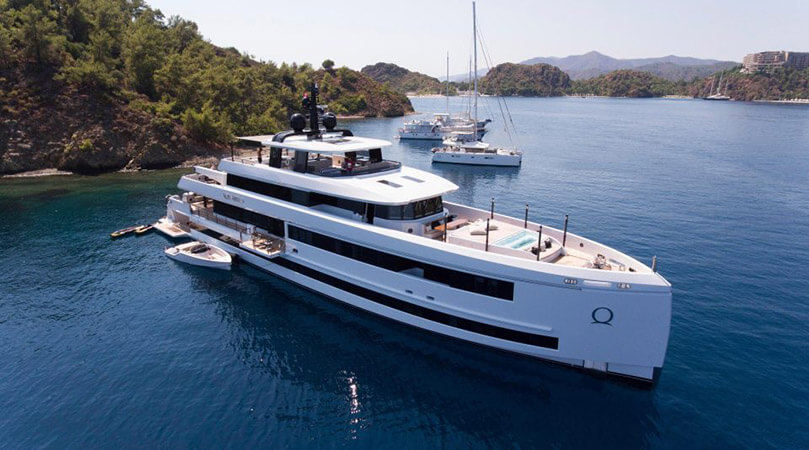
Imagine that you are contemplating possibly one of the biggest purchases of your life – a superyacht. One that will fit in with your desires, ambitions, tastes and lifestyle. A luxury floating residence that will, if you wish, take you to most places in the world. Whether this is real or merely a dream, you may now want to turn your attention to the all-important topic of what I will call ‘toys’; and what others may call essential accessories. These can be boiled down to two types. Those that enhance the sea-faring aspect of your superyacht and perhaps do deserve the moniker of ‘essential accessories’, and those whose primary purpose is to enhance your enjoyment of your purchase – and really do deserve being called ‘toys’. There are too many items to describe here, so what follows is merely a small selection of the ways in which you can spend / invest (you choose the term you prefer!) your money. So, which shall be considered first – the useful accessories or the toys? You guessed it – first we will consider some of the more expensive toys. The second part of this article will be slightly more down-to-earth and consider some useful accessories. Toys – going up Boats, as you may have noticed, tend to stay more or less at one level, namely at sea level. Therefore, we obviously need some toys that overcome this limitation – such as helicopters and submarines. Of the 771 Superyachts currently for sale, some 41 have a helipad. It must be admitted that you need a certain size of yacht, and wallet, to have a helipad. However, there is no doubting their convenience compared to a mere dinghy or tender. They are great if you want to explore an uncharted area or to pick up and welcome guests with a certain style. Of course, you need to consider a number of technical issues, such as the size and weight of the helicopters that will be supported, including possible refuelling issues. This whole area is – quite rightly – heavily regulated and subject to a number of survey, design, certification and important safety issues. In particular, a so-called ‘touch and go’ helipad is one that is explicitly excluded from some of the certification and other issues, but cannot be used for anything that could be regarded as commercial use. One essential question regarding helicopters is how many helipads do you need – one or two? Personally, I think that more than two helipads is just showing off and is somewhat vulgar! Helicopters can range from simple, relatively low-cost choppers such as the Robinson R22 to more complex, powerful ones with greater carrying capacity. Realistically, the very smallest machines may offer limited benefit as they will only carry one pilot and one passenger. Therefore 4 seaters upwards, with some capacity for luggage, should be considered the minimum that would be of realistic use. The type and size of helicopter supported is an important design consideration for your helipad. Another key factor is – are you going to actually store a helicopter on board, or merely use it so that others can land their choppers on your superyacht? If the former, you need to take into account storage space, spares, fuel, weight distribution and even the possible need for a hangar. The writer must confess to an interest here. He owns some 9 helicopters. In case you think this is somewhat extravagant, I would like to point out that the largest is only 5 feet long. They are housed in a small room in our house that my wife disparagingly calls the helicopter room. Toys – going down Let’s talk about exploring underneath the ocean levels. There are three ways to do this from your superyacht: Scuba diving Scuba, assisted by a motorised scooter Submarine The first method is simply to scuba dive. Training via a competent organisation such as PADI or BSAC is essential in order to do this safely. The constraints are that unless you use specialist equipment, you are limited to 35 metres below the water for 30 minutes with a medium level of training and experience. More than this requires specialist training and equipment, such as that associated with technical, trimix, diving. Trimix uses a mixture of three gases: oxygen, nitrogen and helium. I would suggest that any superyacht should contain some basic scuba kit, and trained personnel, so that any underwater issues with the vessel can safely be investigated without having to haul the boat out of the water. Just a word of warning. Don’t ever call the things you attach to your feet ‘flippers’. They are not, and any real scuba diver will have fun pointing out that the correct term is ‘fins’. Likewise, the tanks on your back are definitely not ‘oxygen tanks’. If they contained pure oxygen, they would kill you. For normal scuba diving they contain highly compressed air. If you want to scuba dive, but move faster or further, why not consider some motorised assistance? There are a number of diver propulsion vehicles (DPV), also known as an underwater propulsion vehicle or underwater scooters on the market. These battery driven devices pull you along underwater. They are very cheap, only costing several thousand UK pounds. (Hey, we are talking about superyachts here, so this is cheap in this context.) They help you go further, and possibly use less air as you are exerting yourself less. Also, most importantly, they are great toys. However, in reality, these systems will only ever move you at 2.5 to 3 knots maximum, so do not regard them as an underwater equivalent to a high-speed RIB. If you really want to do a lot more underwater and do some serious exploring, then you have no choice but to get your own mini-submarine, or ‘submersible’. As with a helipad, there are a significant number of design considerations to take into account. In particular, the submersible needs to be stored somewhere;
SuperYacht Toys – Part 2
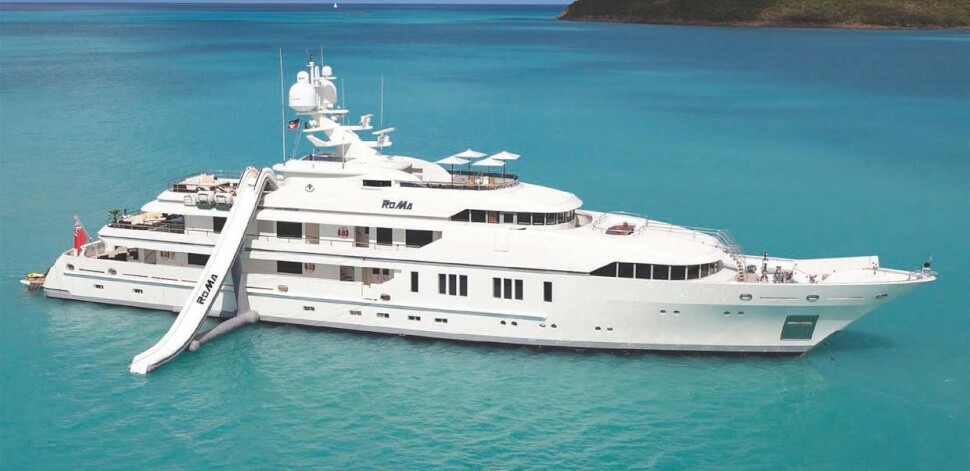
In my previous article, I wrote about some of the ‘essential’ toys and add-ons that were necessary for your superyacht. We covered helipads and helicopters, scuba diving, motorised underwater scooters and submarines. As promised, this month at least some (not all!) of the toys I describe are quite sensible and affordable across a very wide range of budgets – so let’s start off with automated fender systems. Automatic Fender System These are systems that automatically, at the press of a button (such as on an app), lower the fender to the correct height, Then, when you leave the berth, they raise the fender and store it automatically out of the way. Are these systems needed? Of course, at this point, some ‘old sea-dogs’ will be raising their eyebrows as they much prefer to do it the old-fashioned way – by sending their long-suffering crew (often their partner!) onto the bow (no matter what the weather and sea-state) and shouting sometimes fraught instructions. Then, of course, you may have the issue of where to store the fenders themselves. If you are short-handed or single-handed, the situation is worse. It is obviously not sensible for a single-handed sailor to leave the helm while he or she goes to the bow to deploy the fenders. This is especially true as you are approaching the possibly busy entrance to a harbour or marina with some nice sand-banks strategically placed to trap you. It is not even sensible if you are short handed to use the (single member of the) crew to deal with fenders at a busy time coming into a busy marina. They may be better employed as an extra pair of eyes and for fending off. All this applies to more modest boats or yachts, as well as larger ones. For a superyacht with several deckhands, coming into port is when they are busiest.A full automated system could even save the costs of say a single deckhand – with significant savings over the year. A key point about these systems is that they are used every time you moor and depart the berth – so their ‘cost per use’ is quite reasonable; and the purchase price is broadly similar to the cost of, say, a tender with a small engine. Yes – just in case you haven’t guessed, I have to declare an interest. We have them on our own boat, and we were so impressed by them, that we now sell them. This has, I am convinced, saved me a fortune in divorce lawyers bills! My wife confirms this… Slides OK – let’s get back to playful toys. Having a boat implies a connection with the sea; and a slide from your boat is a great – and playful – way of maintaining that connection. Only to be recommended in calm – and preferably warm – seas and if you can swim. They are inflatable and certainly are a fun addition to a superyacht. They are attached to one of the upper decks and enable a speedy entry into the water. They are often custom made for each client. They should have a means of rapid inflation owing to the large volume of air needed and the necessity for a degree of rigidity in the structure. A bicycle pump certainly will not do the trick! You also need to consider the weight of these structures and need a hoist or similar to lift them out of the water. Tenders Almost any size of boat can support a tender – from a small inflatable dinghy to large RIBs with a cabin intended to ferry party guests to and from your yacht. One challenge is where to store them. It certainly helps if the boat or yacht has a garage (usually in the stern) to store this item. If not, then small tenders – such as inflatables or small RIBS can fairly easily be stored on davits. The two main types are: Crane types, where the tender is hung from a pair of small crane like structures. For a large yacht, this could be on an upper deck, where the tender can be stored out of the way. Davits affixed to the stern. These can either be of the pivoting type (‘snap davits’), or the sliding type. With snap davits, the tender is stored on its side and easily pivots into the water, where it can be detached from the stern, and an outboard motor attached. The sliding type usually stores the tender fl at, often covering much of the bathing platform, and you push it out to launch the tender. The real issue with davits on the stern is simply the space they take up. This is areal issue if you are mooring stern-to with a modest size bathing platform, as it hinders the way in which the crew can move around from one side of the stern to the other to fend off. One alternative is to store the tender face down on the bow. Provided that it is lashed down well, this may be viable for a small inflatable. However, it then becomes difficult to deploy (throwing it over the bow rails?); and you must ensure that it does not block any escape hatch from the front cabin. Truthfully, there is no one ‘best’ solution for all situations. Where and how they are stored is a matter of compromise and space. Companies such as MasterCraft and Williams make the larger, plusher, tenders that are more appropriate for the true superyacht. These can – and do – cost as much as a small sports cruiser; and are as functional, fast and spacious as one. Jet Skis While the purpose of a tender is mainly practical – to transport you from yacht to shore and back; the purpose of a jet ski is almost entirely for fun. They offer speed and a closeness to the water. Consider them as a motorbike for the water. Perhaps unfortunately, they sometimes have a bad