
How To Choose The Right Marina
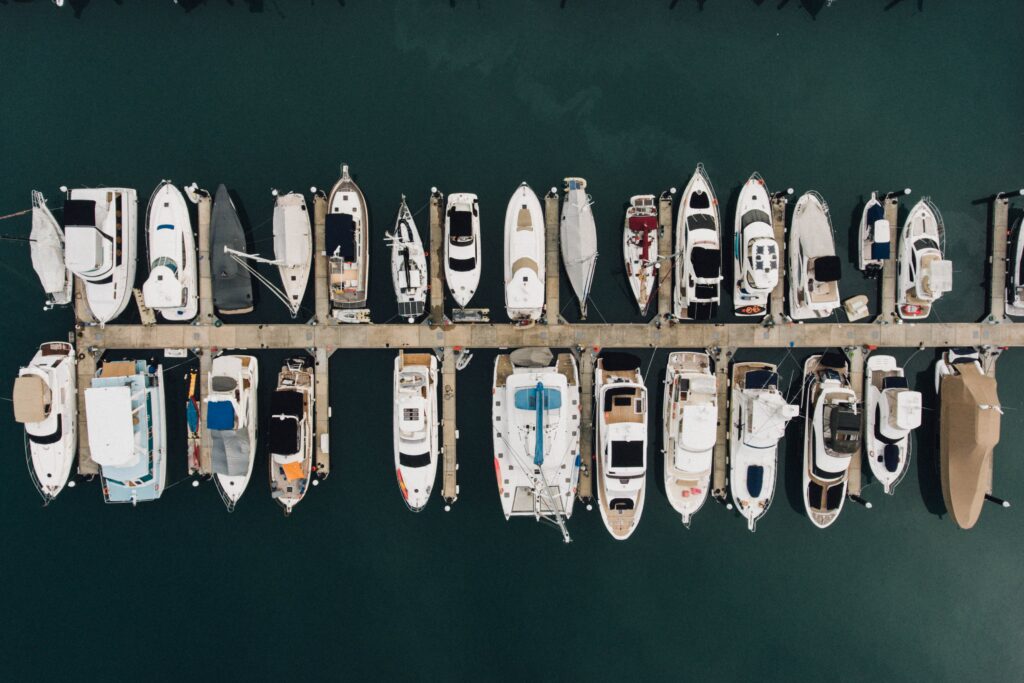
Marinas, Moorings and Berths OK, you now have the boat of your dreams. Just one tiny little challenge exists. Where do you put it? Most people decide on a marina, depending on the size of the boat. Given that we are talking about boating, you won’t be surprised to hear that marinas are not cheap! Their pricing is usually based on so much per metre LOA. Some marinas have a two-tier system, with lower per metre rates for smaller boats. Location, Location, Location The first practical criterion to consider is location. That can mean somewhere fairly local to you, or it can mean an idyllic spot in the sun – typically the Mediterranean for Britons. The great advantage of somewhere local is that you can easily get to your boat when you have the time, and the tides and weather are suitable. At Go Earth, we can use our database of marinas to tell you all the marinas within easy travelling distance.For others, having their boat in a sunny climate is of prime importance. You need to take account of flight availability and cost; and the different rules and regulations abroad. Types of Marinas The three main categories are: Coastal marinas River or lake marinas Canal marinas Coastal marinas tend to be large, have substantial facilities, are usually professionally run and can accommodate most types and sizes of boats. They are tidal and so marina access times need to be considered. They may be behind a lock or cill gate. The surrounding environment can be very varied – from the picturesque to the industrial. The main UK locations tend to be clustered around the south coast, north Wales and the Scottish lochs. River or lake marinas tend to be more modest iin size and often have fewer facilities. They may be tidal or nontidal. For example, the River Thames has both tidal and non-tidal sections; it is tidal up to Teddington Lock, and non-tidal beyond that. The largest lake in the UK is, of course, Windermere, with several marinas of varying sizes. It provides a peaceful, but limited, boating environment. However, even if your navigation skills are severely limited, it is difficult to get lost on Windermere! The 10-knot speed limit restricts the use of the lake for fast motorboats. The smaller river marinas may provide a more intimate, friendlier, more personal service. Some can be very picturesque indeed. These marinas are usually only suitable for smaller boats such as cabin cruisers, and smaller sports cruisers. Finally, we have canal marinas. These are part of the extensive canal network in the UK and are specifically for narrow boats. One feature is the culture of canal life – it is friendly, slower paced (indeed, for those used to powerboats, much slower paced!), with many residential occupants. Canalside pubs are a welcome feature of many canals. Learning how to use the numerous locks on the canals is an essential skill. Internet Access For many people, boating is a way of getting away from it all completely – and if that’s you, then feel free to ignore this section. For others (the author included, I am ashamed to admit!), continued internet access is crucial for business reasons. So, you need to check what the internet access is like at your marina – in your berth and even down below deck where the signal might be weakened. Berth Holders Associations Most marinas have a berth holders association that exists to represent the interests of berth holders, who, after all, pay a lot of money for their berths. Associations carry out activities such as putting on social events, organising ‘cruising in company’, putting pressure (if necessary) on the marina to improve facilities, running a website with useful information (such as tides and local pilotage), attendance at local boat shows, and gaining discounts from local chandleries, shops and restaurants in the locality. My local association at Conwy (www.cmbha.net) does all this, although associations can vary in how active they are. Anchors Away You might be wondering if there is any ‘objective’ way you can assess the quality of a marina. Well, there is an award scheme run by The Yacht Harbour Association (TYHA), called the Gold Anchor Award Scheme. It awards from one to five anchors to qualifying marinas, based on a variety of criteria. Marina Facilities Of course, there are many other factors to consider. You can email info@boatsearch.earth and we will be happy to provide advice.
5 Myths About Buying a Boat
Myth 1: Boats Are Only for the Super Wealthy Boats aren’t just for billionaires. While superyachts can cost millions, there are boats available for a few thousand pounds, especially in the second-hand market. From modest dayboats to luxury catamarans, there’s something for every budget. Thanks to flexible marine finance options and a wide variety of models, boating is much more accessible than many people think. The key is to buy wisely, just like with any other major asset. Myth 2: You Must Pay the Full Price Upfront You don’t need to pay 100% in cash to own a boat. Marine finance providers offer loans with flexible deposits and repayment plans, often up to 10 years, with competitive interest rates.Most lenders will expect a decent deposit (typically around 30%) and a stable income. If you have seasonal income, you can choose a lender who understands and accommodates this. Myth 3: Bigger Boats Are Always Better It’s tempting to buy the biggest boat you can afford, but bigger doesn’t always mean better. The right boat depends on how you plan to use it.✅ Smaller boats are easier to handle, cheaper to maintain, and often surprisingly spacious.✅ Larger boats offer more luxury and room, but come with higher costs, more upkeep, and may require crew.The key trade-offs when buying a boat are size, age, and price. Myth 4: It’s Only Worth Owning a Boat in Hot Climates Boating isn’t just for the Mediterranean or the Caribbean. Many of the most active boating communities are actually in cooler countries like the UK and Scandinavia.British lakes, rivers, canals, and coastal waters offer fantastic boating experiences, often with fewer crowds. Modern boats are also built with better insulation, heating, and weather protection, making them comfortable year-round. Myth 5: Buying a Boat Is Easy Some people walk into a marina, fall in love with a boat, buy it—and then regret it. Why? Because buying a boat isn’t simple. It’s a big decision.Think of a boat as part house (bedrooms, kitchen, toilet), part car (engine, electrics, navigation), and part floating home exposed to the elements. There’s a lot to consider legally, technically, and financially.
Blue Space, Boating and Mental Health

What Is Blue Space? Blue spaces are officially described as ‘outdoor environments–either natural or manmade–that prominently feature water and are accessible to people’. In short – the collective term for rivers, lakes or the sea As well as being a source of calm for both body and mind, Blue Space has proven health benefits – for example, regularly getting out of the city into a “blue space” can result in improved focus, a greater sense of calm, improved sleep and decreased stress. It can also play a major factor in another sector…mental health. There is a compelling body of evidence that suggests that being in contact with water, can promote human health and wellbeing – and this isn’t just some new age pseudoscience – it’s a growing area of scientific research being taken seriously by scientist and research experts. Blue Health In 2016 a research initiative called BlueHealth was launched, to understand how blue space affect health. Between 2016 and 2020, BlueHealth (Home – BlueHealth (bluehealth2020.eu) conducted over 20 studies in more than 18 different countries across the world, exploring what impact urban waterways have on health. NHS The COVID-19 pandemic has highlighted the importance of being outdoors to people’s mental and physical health, as well as the lack of access to green space. Social prescribing is a way of helping people to manage their health and wellbeing, by enabling them to identify and meet their own needs, through the wider community not just the NHS. The NHS Long Term Plan commits to significantly expanding the number of social prescribing link workers in primary care. Link workers can support individuals who may have complex health care needs who might otherwise be admitted to hospital. Boating People who are frequently with blue spaces, whether through paddle boarding, surfing, sailing or fishing have mentioned the therapeutic quality which it possesses, as described by Hilaire Belloc in his book ‘Moods to fill the storehouse of the mind’. If you’re reading this article, then the possibility of undergoing boat-based treatment sounds pretty appealing to you. Boating Therapy is a form of experiential treatment that allows you to take part in sessions that are based on first-hand practice. The sessions are designed to allow you to learn and heal through the practice of recovery. The opportunity to be present——-within the simplicity of being at one with your environment, without agenda or destination, is a wonderful gift emerging from this space. This can also have a positive effect on us in the blue space and we may somehow feel more at home there; even in a strange way. The Sail into Life programs run by Sea Sanctuary have been taking advantage of the sea’s mental health benefits since they began. The programs allow clients to be at one with the sea, enjoying the space and the sensory awareness. It is these moments the research team believes that can help those suffering from conditions such as depression and anxiety to enjoy a step-change in their treatment. The air is filled with the salty sea air as you capture your surroundings on camera. Suddenly, you begin to feel warm inside and realize that it’s because your boat is moving forward toward a new chapter in your life. During this time, each patient has a unique experience where s/he will figure out the direction she wants to go in life and how she would like to live that life. The patients encompass the motion of the boat on the water, experience the sea salt scented breeze and are given a chance of self-reflections without worldly distractions. Greenery It’s no secret that nature is good for you. People who live in areas with greenery around have more positivity and calm than people living in the concrete jungle. Nature therapy is beneficial to people suffering from ADHD and dementia. Living and spending time in a green environment helps increase creativity, productivity, and reduce aggression. When we listen to the tweets of the birds and the sound of a waterfall, we feel calm and at ease more than when we hear the noise of traffic. Listening to the sounds of nature helps us relax and even improves our health in measurable ways. Nature can make you feel more alive, connected, and peaceful. Environment Secretary George Eustice announced a £4 million investment in July 2020 for a cross-government project aimed at preventing and tackling mental ill health through green social prescribing. This fund has since been increased with additional contributions from NHS England and NHS Improvement, Sport England and the National Academy for Social Prescribing (NASP), taking the total to £5.77 million. Finally, the project’s goal is to embed green social prescribing into communities and test how it can improve mental health outcomes, reduce health inequalities, and reduce demand on the health and social care system. The project will also work towards developing best practice in making green social activities more resilient and accessible. We can take from this article many useful points, for example how blue space is peace to the mind and eyes, how greenery freshens you up anew and finally how beneficial boating can be towards moving to an more healthy mind.
Interview with Blue Davies

Go Earth Marketing Manager, Jacey Roberts, had the pleasure of sitting down with Blue Davies, to talk about all things boating. Blue has a wealth of experience within the leisure-marine industry, including 5 years as the Head of Training at British Marine. More recently, Blue has joined the team at Go Earth as our Brand Ambassador. With a plethora of knowledge and contacts, invaluable to Go Earth and it’s clients alike. Firstly, welcome to the team, Blue! Secondly, what do you think of Go Earth’s new website? Thanks for the warm welcome, Jacey! I am thrilled to be working as a Brand Ambassador for Go Earth. The new website looks great – it looks slick and is easy to navigate – making it easy to locate the services you may be interested in. How do you think Go Earth’s services can help boat buyers? The Go Earth offer is unique and offers such a broad range of services that a boat buyer will be able to access a range of independent advice and guidance in their journey to buy a boat. What trends do you see or predict in the boating industry? The main trend I think will be technology and how it makes boating easier to access, simpler to partake in and safer. This in turn will attract more family-oriented users and hopefully a more diverse section of the community. With the easy-to-use technology, a wider range of people can get into the boating industry, compared to a white male dominated market. Also, social media will help, seeing a variety of different people to get into the boat search. How would a beginner put ‘dip their toe in the water’ with boating? Seek out your local Sailing Club, most will have opportunities for beginners to give it a go, whether is sailing or powerboating. Take a course, get qualified and build your confidence, then in time the next step is to give Go Earth a call and look in to buying your own boat. What are some great reasons people should buy a boat? A lifetime of adventures awaits you, and what better way to experience that than in your own boat? It has great health and wellbeing benefits as well; fresh air, exercise and the freedom of the seas. Owning a boat can seem daunting and there is much to consider before buying, but ultimately it can be easier than you may think. Purchasing a boat doesn’t have to cost the earth either, starting from as little as £3000 for a 5-metre sail boat. There are excellent programs for children as well, where they can learn to sail and be confident in their abilities. What are some questions you should be asking the seller before purchasing a boat? Always have a survey completed on the boat you are buying and if possible, it’s like when buying a car, you wouldn’t buy a car without checking if it has an MOT. Also, take someone with you who knows about boats, especially if you are new to boating. This is where Go Earth come into their own, providing all the advice you will need to make a purchase or not as the case maybe. What are some destinations you would recommend to visit on a boat in the UK? I live in the Solent on the south coast of England and the waters around the coast line are fantastic, with the Isle of Wight close by and rivers like the Hamble and Beaulieu easy to access with stunning scenery. Jacey: I live in the ‘Cheshire circle’ which hosts a number of canals, nestled within chocolate box villages. The canals are a great way to spend time on the water – you can hire narrowboats which is great fun for all the family.