
Embracing Fender Technologies to Enhance Boating Experience
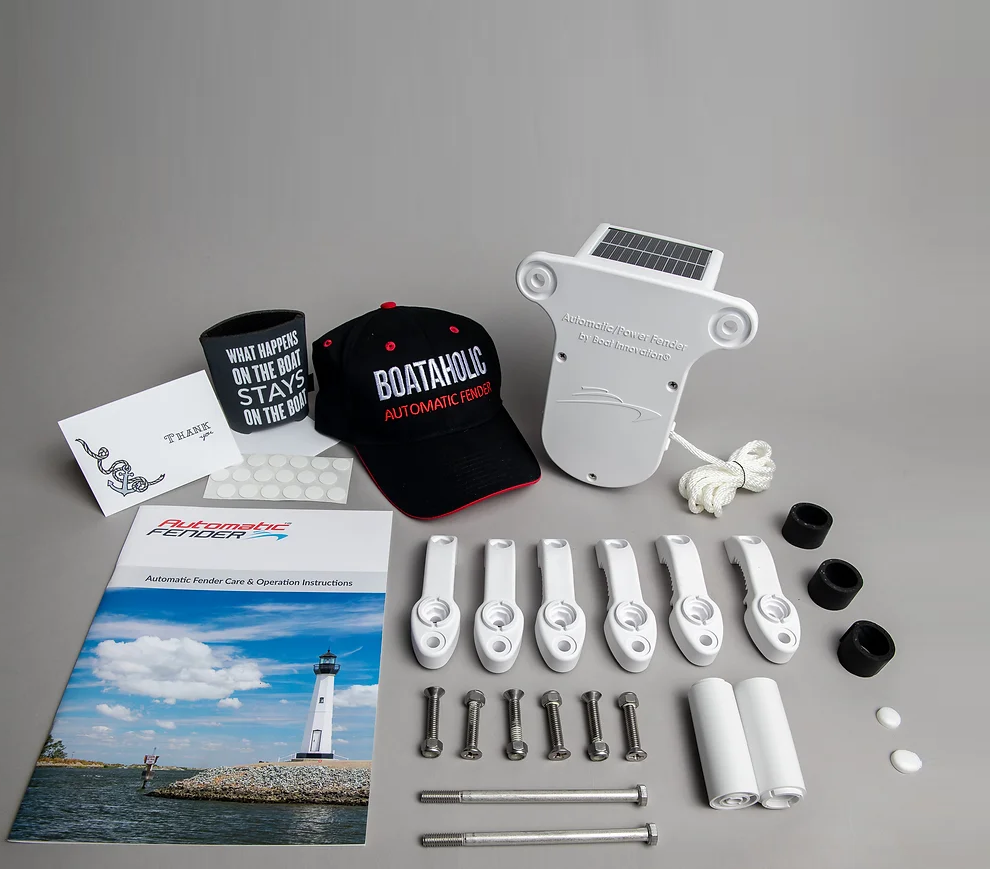
Boating has always been a blend of tradition, skill, and adventure. However, as technology continues to advance, it is worth it for boaters to embrace the latest innovations to enhance their yachting experience. We will explore the rise of fender technologies, and examine the role of a Fender System in facilitating safer, more effortless procedures for docking and undocking boats, thereby minimising the risk of unwanted impact damage to the boat. Some experienced boaters may say “I have been on boats long enough. We do things the way we always have, using our hands, our eyes and our instinct – that is what real boating is to me. Not some fancy technologies.” Long-time boaters often are not too quick to adopt new technology because they have years of practice and trust in the old-school ways of doing things. They reckon that sticking to what they know keeps the real spirit of boating alive, even though the technology could make their boating experience safer and easier. New Technology Broadens the Horizon in Boating Similar to the emergence of digital photography in the 1990s, there was initial resistance from professional photographers as they were deeply rooted in their established analogue techniques, and perceived this technological shift as a potential threat to the art. However, as time passed, they began to realise that digital cameras not only preserved the fundamental principles of photography but also expanded its scope, adding diversity and excitement to the craft while reducing cost. This flexibility ignited a resurgence of interest in the art, enabling professionals and amateurs to experiment with new styles without losing sight of basic photography theories and skills. Similarly, the Fender System enhances the pleasure of boating by facilitating safe docking and undocking procedures, while boaters continue to refine and utilise their boat manoeuvring skills. This increased safety measure reduces potential damage to the boat and relieves boaters’ stress during the process, hence enhancing the overall experience on the water. How Does It Help? We probably agree that docking a boat is quite challenging, as boat fenders are set to mitigate the unavoidable knocks and scrapes that might cause during docking and undocking. Naturally, it is always an unexpected gust of wind, a sudden turbulence on the sea surface, or an oversight that makes boat arrival and departure at a berth risky and even dangerous. Despite its usefulness, boat fenders come with complications for boaters, as they are bulky to store and inconvenient to use, not to mention the challenges of having a crew to position them correctly at the bow, especially in turbulent waters. The situation can be even more problematic for those who have limited mobility, or those who love sailing solo – the necessity to abandon the helm to deploy or lift fenders during the docking and undocking process is not only risky, but it could be an unwise course of action. The Fender System addresses all these challenges. Using smart sensing technology and remote monitoring & control, the system allows boaters to control boat fenders remotely from the cockpit when docking or undocking the boat, significantly reducing stress and effort, especially in dangerous situations. The system is notably easy to use. It has been designed for boaters to manage it from anywhere on the boat using a smartphone or tablet and a simple app. Powered by batteries that last a long time, the system comes with a waterproof casing so boaters do not have to worry about regular replacements. The installation of the Fender System is considerably simple by just screwing it on the boat rails using a suitable screwdriver. The Fender System is not just about making docking and undocking safer and more efficient, but also about keeping things neat. It also serves as a practical tool for novice boaters, allowing them to hone their sailing skills, while simultaneously enjoying sailing. The integration of traditional skills and the Fender System is paramount to enhancing the yachting experience. By embracing innovations, boaters can preserve their connection to the rich heritage of seamanship while enjoying the safety and convenience. Learn more about the latest version of our Fender System. Feel free to contact us for placing your order.
An Interview with Boat Trader
The leisure marine industry has many different companies in many sectors selling a wide variety of goods and services to boaters and potential boaters. In this special interview, we talk to Boat Trader and explain why ‘Go Earth does it differently’. Something different Boat Trader: Martin, can you tell us a bit about why you started Go Earth Martin: There are two main elements to this; a link with the water and wanting to do something different – some ‘thinking outside the box’ – if you will forgive the cliché! Firstly, we have had a link to the water in one form or another for many years. We been boaters ourselves for over two decades, and I have been a scuba diver for four decades. Our daughter and son-in-law are both qualified PADI scuba diver instructors. I am also a dinghy sailor – or at least attempting to be! So, we got to know the vast variety of companies in the broad leisure marine industry. Next we decided to form a company – with something to do with boating. Initially we were not sure what exactly was wanted. One thing we were sure of – we did not want to do the same as everybody else. In a nutshell, we wanted to do something different that would ‘add value’ to the boating community. Boat Trader: What do you mean by ‘something different’? The art, craft and science of boat buying Martin: Frankly, at first we were not sure. So, we indulged in (cliché alert!!) some out of the box, blue-sky thinking. (Well, I did warn you about the clichés!) What we eventually realised was that we needed to do things that were of genuine value to boaters, which were not currently being done, and which we could deliver successfully. We did not want to be just another chandlery or another boat sales company or another training school. One thing that we kept on hearing was of people who were not quite sure what they wanted when they were buying a boat and how to go through the whole process. Brokers help, of course. However, they have to act for the seller, not the buyer. Therefore, a key element of our business is helping people with buying a boat, acting on behalf of the buyer, not the seller. Boat Trader: How do you do this? Martin: By becoming experts in boat buying. The concept is simple enough. Most people only buy one, two or three boats in their lifetime. They simply do not do it often enough to know all the things that should be considered when buying a boat. We go through the process time and time again with multiple clients, multiple brokers and multiple types of boats. As a company, we aim to be the expert ‘port of call’ (another cliché ?) for boat buyers. Requirements analysis Boat Trader: Is that all there is to it? Martin: No, not quite! As well as expertise, you need processes, tools and data to support the activity. As an example of a process, for our boat search, we typically spend some time with the client developing a ‘Requirements Analysis’. We talk to the client, find out what they are looking for, offer advice, and iteratively develop and improve the requirements analysis. This does require a bit of time and work up front; but – very importantly – it helps ensure that the client ends up with a boat that really does suit them and their needs. Note that this is the polar opposite of ‘Oh –I have just seen a nice boat – let’s buy it’. We start with the client, not the boat! Boat Trader: So the first step is the requirements analysis. What do you mean by iteratively? Martin: Sometimes, the client is not quite sure what they want. So – in our enhanced service – we might for example develop a requirements analysis, then do a boat search. After getting our written report, the client will think about it, might develop their thinking further, and might realise that they need something slightly different, or simply change their mind about some aspects of their requirements, or have a change in the budget they are willing to spend. We then (at absolutely no extra charge) change the requirements analysis and re-run the search for them. Boat Trader: What if they change their mind again? Martin: No problem. With the enhanced search, we will run the requirements analysis / boat search a third time, again at absolutely no extra charge. The important thing for us is that the client should not be locked into their initial thoughts. We want them to end up with a boat that really does suit their needs. Software tools Boat Trader: Earlier on, you mentioned that you used some ‘tools’ in your work. Martin: One of the tools that we use is some software that we developed in house. It holds an enormous database of brokers and others – UK and global – covering a vast range of budgets, boat types, locations and so on. During a boat search, we can input some key parameters from the requirements analysis and use that to query the database to identify the brokers that are likely to have boats that match the requirements. This database also includes, for example, user forums that sell boats, brokers who don’t advertise on the internet, some private sources, some not-so-well-known auction sites and so on. If you are searching for a superyacht, then you clearly need to focus on those brokers, not ones selling, say, narrowboats or river boats. The software helps us to this effectively and efficiently. Data Boat Trader: What about the ‘data’ bit? Martin: Easy – We accumulate masses of data inside our software. We use that
Deciding What You Want From Your Boat
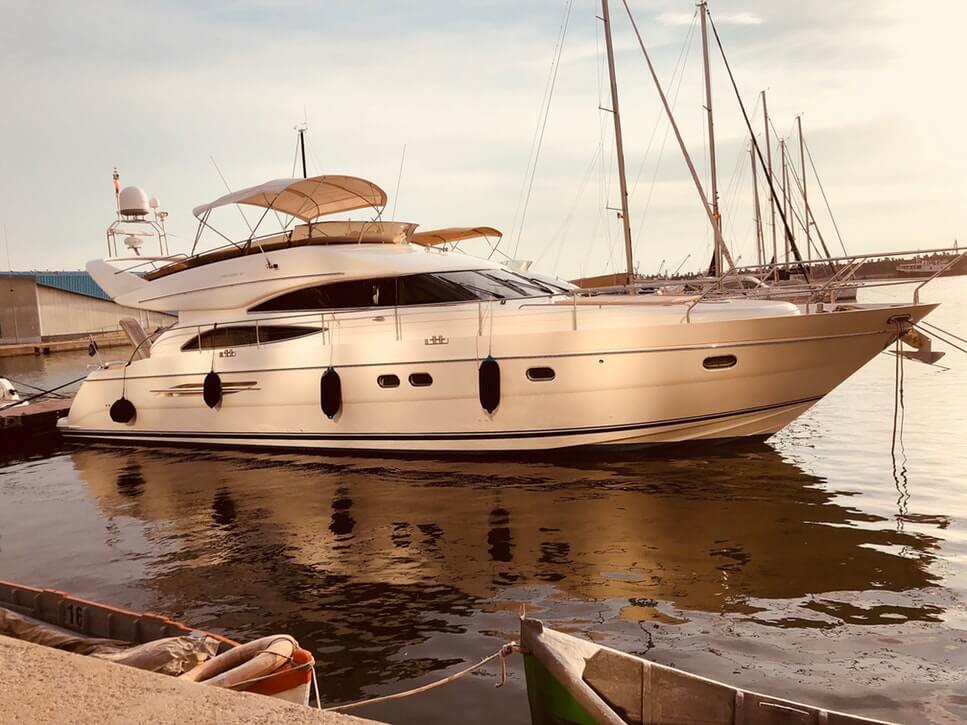
Deciding what you want from your boat One of the challenges when buying a boat, especially if it is your first boat, is deciding what you want. At Go Earth, we call this process “Requirement Analysis” – a term unceremoniously nicked from project management and software development. Breadth of choice So – you know that you want to buy a boat – but what sort of boat? There are more varieties of boat than, say cars. This means that – if you are to make best use of your money and get a boat that you will enjoy for a long period – you need to give it some thought. Let’s look at some of the variety of choices you need to make. All cars, for example, have 4 wheels – unless you are Del Boy! (And for the younger readers, do a Google search on ‘Del Boy car’!!). Boats on the other hand can have one, 2, 3 or even more hulls. In fact some racing yachts hardly use their hulls, as they are on foils. What about motive power? In cars, the choice is between petrol, diesel and electric. However, they are all broadly similar in that their output is rotary power – turning wheels. The differences between the main ‘power units’ on a power boat (engines) and on a sailing yacht (sails) could not be more stark. What about Price range? Again, the differences are massive. No matter how hard you try, it is really very di ffi cult to spend more than (to take an extreme) £2 million on a car. It’s dead easy to do this for a boat. Trade-offs The main trade-offs to consider when purchasing a boat of any type are: Size Age Price Subsidiary trade-offs are Condition, including service history Brand Other factors, such as the inventory seem to pay only a very minor part. Sometimes, great electronics or the availability of a dinghy and engine may be a minor factor. As a purchaser, you need to decide on the relevant importance to you of these factors. Age matters In respect of these trade-offs, boat are similar to cars. The older the car, the cheaper it usually is. There are exceptions – some classic cars (what we used to call ‘old bangers’!) may appreciate in value. However, the general rule still applies – there is a depreciation curve showing how price falls at the boat gets older. At Go Earth we have records of asking, and sold, prices for many models; so let’s take one random example, the asking prices for a Fairline Targa 48. We did an analysis of average asking prices for this model, and this is what we found. Illustrative Prices – Fairline Targa 48 In the table, the first column is the year, the second is the asking price, and the third is the annual depreciation compared with a model a year younger. These prices may be only approximately typical, but they illustrate that (as with cars) the newer the boat the larger the depreciation hit. We find that once you get to the older boats, and if you buy wisely (using Go Earth’s negotiation services!), you can suffer zero depreciation for several years. Size matters There is, however, one big difference between cars and boats. Cars are all very broadly the same size. Even the largest SUV is probably only twice the size of the smallest micro car. The size difference in boats is immense. This leads to a major impact on price. As a very approximate rule-of-thumb, the price of a boat increases as the cube of its length (as a boat increase its size in all 3 dimensions). So, a boat that is twice the length of an other one, could be 8 times the cost. Given that all boats shrink when you put them in the water (yes, I know that does not literally happen – I just mean that a boat on hard-standing always looks bigger than when it is in the water), deciding on the size of boat is a very important part of the decision making around defining your requirements. Flybridge or Sports Cruiser? Let’s take just one specific example of the sort of decision you need to make. Suppose that you are in the market for, say, a power 38 to 42-footer. Two of the main styles of boat are flybridges and sports cruisers. Which suits you best? If you are going to do this comparison, it may be helpful to know the typical main characteristics of each type. This is a summary: Flybridge Depending on the brand, there may be a limited range of models. By having a flybridge, this usually gives you more overall deck space, as you have a deck on top. Easier to manoeuvre in a marina, as you can see mostly around you from the flybridge. Two helm positions. Arguably, more traditional looking. Need to cover the flybridge with a tonneau cover in inclement weather. Flybridge is a nice space to entertain in good weather. However, the steps up to the fl ybridge can be steep, though. Better view of the scenery and surroundings from the flybridge. Slightly more susceptible to side wind, owing to higher windage. Can make berthing the boat slightly trickier in open marinas with high wind Slightly more susceptible to side wind, owing to higher windage. Can make berthing the boat slightly trickier in open marinas with high wind Cruising in warm weather from the flybridge is very pleasant. At larger sizes, flybridges tend to be the most popular choices. Higher – therefore bridge clearance can be an issue, primarily in inland waterways. More expensive per foot length, owing to an extra deck (i.e. the flybridge); but possibly cheaper per square metre of deck space. Flybridges tend to have better galleys. Sports Cruiser Possibly a more extensive choice. Less deck space. Fixed point to steer from – possibly limited visibility at some angles. One helm position. Sleeker,
Viewing a Boat For Sale
You are looking for your first, or your next boat. Let’s assume that you have narrowed your boat search down to a few boats that might be suitable. Now we get to the exciting bit. Viewing potential purchases. All you need to do now is view them, and then make a decision. Sounds easy? Sadly, no it’s not. This article is intended to give you a few hints to help you through this potential minefield so that you (eventually) get the right boat for you. Create the short-list The typical purchase process involves doing a boat search (something that Go Earth can assist with) by trawling through a variety of sources. Eventually, you may have a short-list. How many boats should be on your short-list? You may think that one or two are sufficient. After all, you have read the particulars carefully and may have spoken to the broker who assured you that the boat was excellent. The reality is that many of the boats simply turn out to be very unsuitable. What could go wrong? What should you look for? Possible issues to identify on the viewing You need to view each boat with open eyes. It’s the ‘head vs heart’ syndrome. Definitely do not set your heart on a boat before you have viewed it and thought about it. There are a few things that you can do to ensure that your viewings are not a waste of time. Take your camera with you and photograph all aspects of the boat. This is ideally a good digital SLR if you have one. Fit it with a wide-angle lens, so that you can see more in each photo. It is also handy to have a telephoto lens, so that you can take photos from different angles and distances. You should also take a good torch or use the flash on your mobile phone, and ideally bounce the flash off a white or pale surface. This will help you see the darker areas of the boat (such as in the engine bay), without sharp shadows hiding possibly important details. A mobile phone (in addition to your main camera) can be pushed into recesses that a full-size camera cannot reach. Keep a careful record of which photos belong to which boat. Make copious notes during the visit. The whole boat should be examined for obvious signs of damage or problems. For example, we viewed a boat for a client where the area where the mast went through the coach roof had a repair. (See the photos.) That by itself might not have been a cause for concern. However, the repair had been badly done and most importantly, the repair itself seemed to have cracked again, possibly suggesting continuing stress at that point. On further investigation, we noted a jagged line of gelcoat cracking along the starboard side of the coach roof. Again, there had been attempts to repair this. (See the further photos.) The point is that this investigation suggested the possibility of a major structural event at some time, such as a de-masting causing significant damage. We recommended that our client should not touch this boat with the proverbial bargepole. One issue that often worries people is ‘osmosis’. This is frankly very difficult to identify on your visit. Even the ‘worst case’ – stage 3 osmosis – will typically only show blisters below the waterline. If the boat is out of the water, then look along the line of the hull. Ideally with the sun in line with the bow-stern, so that it will cast shadows on any blisters. This is really a job for the surveyor. One useful tool to use when viewing a boat is your nose! If it smells damp and dank, that may be a warning sign. Of course, when you find potential issues, you need to decide how serious they really are. Some issues are simply what you must realistically expect on an older boat. Others are easily fixed. We viewed another boat for a client that looked like it had a coral reef growing off its hull (see the photo). In this case, it was simply that the owners had not used the boat and the antifouling had worn off. The boat itself was actually perfectly fine, with no issues with the hull, and no signs of osmosis. Once it had been cleaned off and anti-fouled, it looked almost like new. Crack near the mast Gelcoat cracking along the coach roof Continuing cracking with a poor repair Coral reef growing off a boat? Time-poor? How many on the short-list? Pre-view service? It is a truth universally acknowledged (with apologies to Jane Austen), that most boats you visit will be entirely unsuitable. We see a lot of boats on behalf of clients and we think that about 75% should be rejected; and of the remainder only about half of them will really hit the mark. In other words, as a rough rule of thumb, only about 1 in 8 will be really suitable. It follows that if you want to have a couple of real possible candidates to choose from, you need to have, on average, some 16 boats on this initial ‘short’ list. (Feel free to check the maths!). If you have the time, like visiting boats, and have the expertise to identify issues on a first visit, then this is not really a problem for you. On the other hand, if you are ‘time-poor’, are better spending your time running your business or career, don’t like travelling far and wide, or wish to reduce the risk of missing issues with a boat, then you might want to consider using an agent to do pre-viewing. We (Go Earth) provide a ‘pre-view’ service where we will visit a number of boats on your behalf, and provide a report with many photos so that you only need to visit boats that are at least potentially viable. This service is available in the UK and globally.