
The Hunt for Stacia Leigh
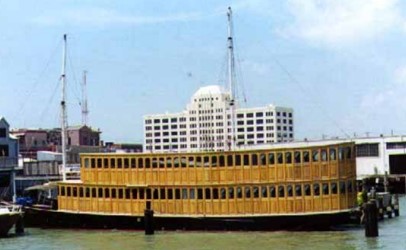
The Hunt Starts As a company one of our specialisms is finding suitable boats for clients. In this we are assisted by our own bespoke software known, immodestly, as ‘BEST’ (which actually stands for Boating Enterprise Search Tool!). Recently we were engaged for a very unusual assignment. A client wanted to find a specific boat of great historical interest, which was built in the early 1900’s. He was interested in its fascinating history and in trying to find out its current location or what had happened to it. He had already engaged three local researchers for a period. They had not succeeded in the task. So, as specialists, we were called in. Could we help? We were specifically engaged to investigate and report back on what had happened to the boat variously known as Chryseis and Stacia Leigh. Our research team consists of Joseph Dewhurst, John Thain, Mollie Fordyce and Ilistyl Scates-Stenzel. Although they were very busy on other tasks, it only took our researchers a mere three days to find out the history of this boat and what had happened to it. This is its story. It turned out that this boat has done everything, from being part of the pioneering motor industry, to unsavoury connections to the Nazi and Axis regimes, to smuggling arms, to becoming a movie star in not one but 4 films, to being a bed and breakfast. So – for more, read on… It’s early history; 1906 – 1998 The boat was built in 1906 by clipper company Le Havre, hull number 0227, and named Chryseis. The significance (if any) of the name is not clear; however “Chryseis” is one of the female characters who appears during the events of the Trojan War in Greek mythology. The basic metrics are impressive for the time. It had a gross weight of 84 tons, measured 31 meters LOA, a beam of 4.8 metres and a top speed of 9.5 knots. This was the largest petrol driven yacht that had been built up until then. We think, but are not certain, that the hull was designed and built at the Dubigeon shipyard, in Nantes. The rear fittings were by Maison Leglas Maurice in Nantes. However, the location has not been verified. The vast majority of the boat was reserved for accommodation. This gave it a feeling of spaciousness even greater than its size would suggest. In the stern, there were 4 master bedrooms, each with en-suite. On the lower deck there were a further 4 smaller cabins for the crew. In the forward area there was space for a further 6 people, with a head and a kitchen area. The original owner was Louis Renault, co- founder of Renault motors and one of the early pioneers of the car industry. Together with his two older brothers, Marcel and Ferdinand, they formed the Renault Freres company in 1899. Louis Renault went on to become a highly controversial figure, supporting the Nazis during WW2. It was while cruising up the Seine on Chryseis that Renault spotted a 1,000 acre estate at Herqueville, Normandy. Just like any modern-day billionaire, he bought the estate. Chryseis was originally fitted with two 50HP Renault petrol engines, with a secondary 8HP motor powering internal electrics. We can speculate that Louis Renault was interested in investigating how his engines would perform in a marine environment. Or maybe he just happened to have a couple of spare engines laying around. Of course, diesel is generally regarded as the favourite fuel for several reasons, including the risk of fire from petrol. This seems to have been recognised as there were several fire safety precautions evident in the design and structure. The petrol fuel was placed above the ship’s own deck. The tanks were above the waterline in watertight double boxes, with direct flow to the sea. The annular space between the tanks and the caissons was filled with sand, such that the petrol tank was therefore embedded in the sand. The fueling devices were also above the waterline in completely sealed metal boxes. Any fuel that could have flown from these devices would have been immediately flushed out of the hull. These precautions eliminated most of the fire risk. We understand that she was then sold to 1937 to Count Galeazzo Gano of Liveno, Italy. He had previously married Mussolini’s daughter, Edda, in 1930. There is some evidence that the Count was a journalist, although evidently a well-connected one.When Count Gano died, the boat was inherited by Mussolini. After Mussolini’s execution in 1945, Italian rebels used Chryseis to smuggle arms. Once the war was over, Chryseis became a movie star! She was used in four movies; The Count of Monte Cristo Seven Cities of Atlantis Chitty Chitty Bang Bang S.S. Commodore. The later years; 1998 – 2004 – and a name change After her movie career, she lay abandoned for several years until she was purchased by Patrick and Bonnie Hicks in 1998. She had been discovered in a shipyard near Dayton Beach, Florida. We could find no record of how she came to be there. The boat was then moved to Orange where she underwent repairs and enhancements for a month. This included the radical addition of the upper deck comprising of five staterooms which changed her looks radically and increased the internal accommodation further. This was eventually to become her downfall. The vessel was then moved to Galveston, Texas. Here she underwent a name change and was operated as the Stacia Leigh Bed & Breakfast. She was named after the owners’ daughter. She was moored at Pier 22 in Glaveston, Texas. Unfortunately, the vessel became unstable probably due to poor weight distribution caused by guests staying onboard and that addition of an upper deck. She sank in April 2004. 2004 – present day – Where are you now Stacia Leigh? After the sinking, we believe she was raised by T&T Salvage and placed on hard-standing. Where are you now, Oh Stacia Leigh? During our research we found the following images taken at Port Bolivar
How To Choose The Right Marina
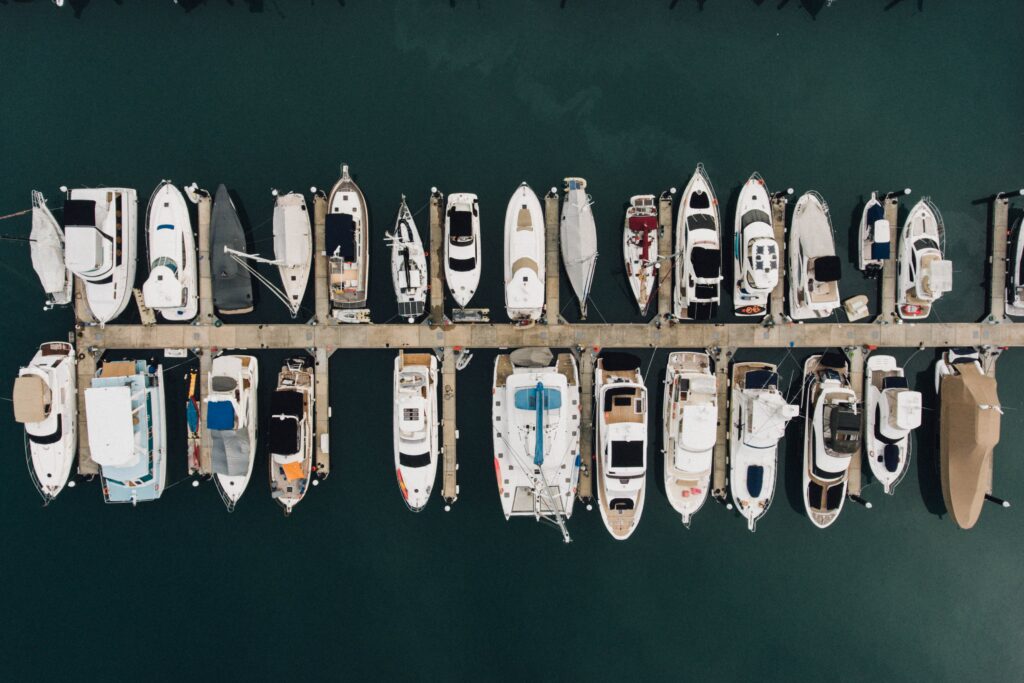
Marinas, Moorings and Berths OK, you now have the boat of your dreams. Just one tiny little challenge exists. Where do you put it? Most people decide on a marina, depending on the size of the boat. Given that we are talking about boating, you won’t be surprised to hear that marinas are not cheap! Their pricing is usually based on so much per metre LOA. Some marinas have a two-tier system, with lower per metre rates for smaller boats. Location, Location, Location The first practical criterion to consider is location. That can mean somewhere fairly local to you, or it can mean an idyllic spot in the sun – typically the Mediterranean for Britons. The great advantage of somewhere local is that you can easily get to your boat when you have the time, and the tides and weather are suitable. At Go Earth, we can use our database of marinas to tell you all the marinas within easy travelling distance.For others, having their boat in a sunny climate is of prime importance. You need to take account of flight availability and cost; and the different rules and regulations abroad. Types of Marinas The three main categories are: Coastal marinas River or lake marinas Canal marinas Coastal marinas tend to be large, have substantial facilities, are usually professionally run and can accommodate most types and sizes of boats. They are tidal and so marina access times need to be considered. They may be behind a lock or cill gate. The surrounding environment can be very varied – from the picturesque to the industrial. The main UK locations tend to be clustered around the south coast, north Wales and the Scottish lochs. River or lake marinas tend to be more modest iin size and often have fewer facilities. They may be tidal or nontidal. For example, the River Thames has both tidal and non-tidal sections; it is tidal up to Teddington Lock, and non-tidal beyond that. The largest lake in the UK is, of course, Windermere, with several marinas of varying sizes. It provides a peaceful, but limited, boating environment. However, even if your navigation skills are severely limited, it is difficult to get lost on Windermere! The 10-knot speed limit restricts the use of the lake for fast motorboats. The smaller river marinas may provide a more intimate, friendlier, more personal service. Some can be very picturesque indeed. These marinas are usually only suitable for smaller boats such as cabin cruisers, and smaller sports cruisers. Finally, we have canal marinas. These are part of the extensive canal network in the UK and are specifically for narrow boats. One feature is the culture of canal life – it is friendly, slower paced (indeed, for those used to powerboats, much slower paced!), with many residential occupants. Canalside pubs are a welcome feature of many canals. Learning how to use the numerous locks on the canals is an essential skill. Internet Access For many people, boating is a way of getting away from it all completely – and if that’s you, then feel free to ignore this section. For others (the author included, I am ashamed to admit!), continued internet access is crucial for business reasons. So, you need to check what the internet access is like at your marina – in your berth and even down below deck where the signal might be weakened. Berth Holders Associations Most marinas have a berth holders association that exists to represent the interests of berth holders, who, after all, pay a lot of money for their berths. Associations carry out activities such as putting on social events, organising ‘cruising in company’, putting pressure (if necessary) on the marina to improve facilities, running a website with useful information (such as tides and local pilotage), attendance at local boat shows, and gaining discounts from local chandleries, shops and restaurants in the locality. My local association at Conwy (www.cmbha.net) does all this, although associations can vary in how active they are. Anchors Away You might be wondering if there is any ‘objective’ way you can assess the quality of a marina. Well, there is an award scheme run by The Yacht Harbour Association (TYHA), called the Gold Anchor Award Scheme. It awards from one to five anchors to qualifying marinas, based on a variety of criteria. Marina Facilities Of course, there are many other factors to consider. You can email info@boatsearch.earth and we will be happy to provide advice.
Buying a Boat – Getting the Right Advice

See a boat you like? Fall in love with it at first sight? Immediately reach for your wallet? That’s all fine – however, you want to be sure that it is a boat that you will continue to be in love with even after that first flush of romance. You need to ensure that the boat continues to provide fun, pleasure and thrills for many years to come. That’s why you should take independent professional advice to help you get the best boat and have the best value for your money. Let’s consider the need for, and some sources of, advice. Why is advice needed? You may very well be experienced in your profession or business. Possibly used to negotiating or being part of a project. Maybe you have technical skills. These are useful. However, we believe that buying a boat is simply more complicated. Think of a boat as a combination of a house, a car, and one that (hopefully!) floats on the water. Multiply those complexities together. This is not a problem in itself, provided that you get the right advice to help you make the right decisions. Sources of advice There are of course multiple sources of advice you can use. The internet provides a great variety of advice. Often, however, you need to know what questions to ask, where to look, who to believe. The internet can be useful; but it can also provide conflicting and unreliable advice. Frankly, I have seen some advice on the internet that makes me cringe as the advice has simply been wrong or even dangerous! Surveyors are an essential and important part of boat buying. However, you need to know how to choose a good surveyor, understand the different types of surveyors and surveys, and how to make best use of surveyors to actually save you money. If you are looking at a boat that has had a previous survey done – maybe a year or two ago – we advise you NOT to rely on it for several reasons. Firstly, the survey is the property of the vendor, not you, so the surveyor owes zero responsibility to you. Next, some issues could have arisen since the survey. Also, if you have been given the survey, then you have been informed of any issues identified, and so you have no come back or room for negotiation on those issues. In a nutshell – you need to get your own survey done. Go Earth can recommend the types of survey(s) you need and assist in finding a suitable surveyor. Brokers are of course often ready to be helpful and give advice. However, please remember that their legal, contractual relationship is with the seller, not you as the (potential) buyer. Also, they – naturally enough – want to sell you a boat on their books. That’s what their job is. Further, if you ask the broker for information, they may simply be unable to give you accurate or full information because they may not know all the boats on their books. Also, it has been known for the seller to forget to tell the broker about significant issues with a boat! Solicitors may be needed for large or complex transactions. However, most solicitors are not specialists in marine matters. Your personal solicitor may, therefore, not be the most appropriate one for a boat purchase. We can help you find a specialist marine solicitor. Go Earth is not associated with any boat broker or boat manufacturer. We are independent. Our mission is to help boaters through all the stages of buying a boat. To do this we provide a variety of services. We can act as your professional advisor and procurement agent. The professional advisory element is typically focussed around requirement specification and identifying makes / models of boats that fit your requirements. Note that we are starting from ‘what are your requirements?’; not from ‘that’s a nice-looking boat, let’s buy it’! Of course, it is not always easy to define your requirements; and so we can help with that process. The procurement agent does what any procurement agent in any industry does – tries to get you the best product at the lowest possible price. Go Earth is an example of a procurement agent, and provides a range of services to help you get the right boat at the best (i.e. lowest) price. While of course nobody is going to give a boat away, a procurement agent can negotiate on your behalf to ensure that you buy at the very lowest viable price. In summary, our services include boat search, boat pre-visits, and perhaps most importantly boat negotiation services. We always recognise that it is your money, and so we will do as little or as much as you want. Our Boats for Sale Listing Explore our select collection of boats! Click Here
Is It A Good Deal?

Safety On Board You’ve probably see pictures or even videos of a boat on fire. It certainly is not a pretty sight and one that quite correctly puts fear – or at least caution – into your heart. There is no doubt that the best approach requires a combination of prevention, detection and first line firefighting. Let’s be clear – if a fibreglass boat is seriously on-fire, then ‘abandon ship’ might be your only option. Never put yourself or others at risk Prevention requires a common-sense but methodical approach. Carry out a Fire Risk Assessment – identify what could go wrong; and what you can do to prevent a fire from ever starting. For example, an absolute no smoking policy is the best approach. Also, be very careful of those gas lighters that are used to light a gas ring – they can still have a flame or be hot when placed on a surface or in a drawer, possibly starting a fire. Detection is quite straightforward. There are many low-cost smoke and fire alarms on the market. (Carbon monoxide alarms are also very important.) They are all easy to fit. We have used industrial strength ‘Velcro’ to affix alarms without drilling walls or ceilings. They seem to hold even in choppy seas. Placement is of course important. You need to have one in every ‘room’ in the boat. Don’t assume that fires only start in the galley. First-line firefighting is more complex. Some basic rules apply. Obviously, a pan-pan or mayday (or dial 999 if VHF is not available) is required. To safely extinguish a fire you need to get to it very quickly. It follows, therefore, that you need an extinguisher (even if just a small one) in easy reach in every room that is likely to be occupied (cabins, galley, saloon etc.). Also, always leave yourself an escape route. One risk occurs if you sleep in a forward berth. If a fire starts in the galley, then this may block a possible means of escape. However, opening the forward escape hatch above the berth also has a risk – of encouraging the fire by allowing a draft of air to fan the flames. This reinforces the need to have an extinguisher close to hand. The galley should of course also have a fire blanket. Be sure you know how to use it correctly to avoid burns to your hands. There is, however, one serious, well recognised problem with the common powder type of fire extinguisher. If they have to be used, they make a truly horrendous mess. Unfortunately, they get into all the soft furnishings, they corrode electric and electronic connections, they are potentially toxic if breathed in, they act as a laxative (!!), they can be destructive of engines. The mess can only be safely cleared up using personal protective gear. Go Earth researched this problem and found two ranges of extinguishers (Firetool for inside spaces and Blazecut for the engine bay) that do not suffer from these issues.